[Sponsored Content] From Single-Task to Multi-Functional: Advantech Empowers ADATA in Developing Multi-Robot Collaborative AI AMRs

In recent years, ADATA Technology, which started in memory and storage, has undergone a magnificent transformation from “data storage” to “physical computing.” Driven by the vision of Founder and Chairman Simon Chen, ADATA has aggressively developed AI edge computing and smart mobility technologies, successfully expanding into smart transportation and medical AMRs. Today, with the strong support of Advantech and NVIDIA, ADATA has evolved from point-based AI applications to a diverse, composite AI application platform and solutions that meet the organizational needs of the “Physical AI” era.
As the world’s second-largest memory module manufacturer, ADATA began diversifying its operations a decade ago. These business expansions, combined with self-developed capabilities in motors and controllers and long-term partnerships with ecosystem leaders like Advantech and NVIDIA, provide a steady stream of energy for the company’s future development in electric vehicles (EVs) and AMRs, establishing a significant competitive edge.
ADATA’s deep dive into the AMR field stems from a keen observation of societal needs. During the COVID-19 pandemic, hospitals faced immense disinfection and safety challenges. Traditional manual disinfection was costly, time-consuming, and exposed medical staff to cross-infection risks. Recognizing this urgency, ADATA converted its years of AI expertise into a protective force, developing the C-Rob Smart AMR autonomous disinfection robot. This not only addressed a pandemic pain point but also marked ADATA’s first step into the Perception AI battlefield.
To expand its AI footprint, ADATA established ADATA AI in October 2025. Leveraging the group’s global distribution channels and Advantech’s robust support, ADATA AI plays a pivotal role in “landing” AI applications, filling the “last mile” gap in the AI industry chain and providing one-stop services from R&D to deployment.
Ivan Lin, Executive Vice President of ADATA, stated that ADATA AI has established two major teams—Digital Twin and Physical AI. The core of this successful transformation lies in the continuous evolution of ADATA’s AMR software and hardware architecture.
Integrating Top-Level and Bottom-Level Systems: From Single-Point Disinfection to Multi-Robot Collaboration
As applications extended from simple corridor disinfection to complex medical collaboration, ADATA realized that hardware architecture required a radical revolution to achieve agility and multi-tasking capabilities.
During the development of the first-generation C-Rob AMR, a “dual-system” architecture was used to balance navigation and image recognition. The bottom-level system was an x86 industrial computer responsible for NVIDIA Isaac™ ROS computations to adjust disinfection plans, while the top-level system independently utilized an Advantech MIC-710AIX to run YOLO AI object detection. Although this configuration worked, it faced challenges such as large system volume, communication latency between systems, and high power consumption, limiting the potential for more complex tasks.
To break these bottlenecks, the second-generation AMR shifted to a more efficient Arm-based system. By adopting the Advantech MIC-732 series edge AI computer and leveraging the NVIDIA® Jetson AGX Orin™ platform, ADATA achieved a technological leap. The NVIDIA AGX Orin module has 64GB memory and integrates GPU and CPU into a single-chip architecture, eliminating transmission barriers between systems. This allows image processing, AI inference, and autonomous decision-making to execute synchronously and precisely, resulting in a 70% reduction in lead time and a 3x improvement in deployment schedules.
Lin emphasized that this integration enhances system stability and helps establish fault-tolerance mechanisms to improve Service Level Agreements (SLA). Powered by the MIC-732-AO, ADATA’s AMR has evolved from a “single-point disinfection robot” into a multi-functional tool capable of handling dynamic needs in ERs, operating rooms, and ICUs—performing composite tasks like transport, measurement, and ward rounds.
Furthermore, by leveraging ADATA ZIGBO’s expertise in Fleet Management Systems (FMS) for commercial electric vehicles, the new generation of AMRs has developed multi-robot collaboration capabilities. This enables multiple robots to work together as a cohesive team within complex healthcare environments, truly achieving the transition from ‘perception’ to ‘total evolution.'”
Synergizing Software and Hardware: A Comprehensive AMR Product Matrix
With the integrated architecture serving as a powerful “brain,” ADATA proceeded to optimize the “senses” and “thinking” of its AMRs, giving birth to a complete product family.
ADATA continues to collaborate with Advantech and NVIDIA, progressively integrating new technologies, devices, and systems onto the NVIDIA Jetson™ platform. By incorporating components such as LiDAR, depth cameras, and environmental sensors, ADATA has comprehensively enhanced the autonomous navigation, anomaly detection, and obstacle avoidance capabilities of its next-generation AMRs. Furthermore, the completed integration of NVIDIA Isaac for Mobility empowers these AMRs with advanced visual navigation and path planning, significantly optimizing the efficiency of ward inspections.”
ADATA has now also introduced NVIDIA Omniverse™ digital twin technology to simulate hospital environments on servers. This allows for the calibration of optimal AMR layouts through virtual testing, shortening deployment times. Training in virtual environments can reduce the overall development cycle by approximately 40%, ensuring high safety before physical deployment.
The AMR family now features a “task-modular” design with over 80% common modules. Future iterations will include robotic arms, evolving from simple mobility to Mobile Manipulation Robots (MMR). The product line includes the AMR 50, 100, 300, and 500 (where numbers represent payload capacity in kg). For instance, the lightweight AMR 50 is suitable for nursing stations, while the AMR 100 can carry disinfection liquids or be equipped with a robotic arm for IV medicine replacement.
Replacing 4–6 Disinfection Personnel: Accelerating the Smart Healthcare Paradigm Shift
Since the COVID-19 outbreak, ADATA has collaborated with National Taiwan University Hospital (NTUH) Hsinchu Branch for an 18-month Proof of Service (POS) validation. This resulted in three major AI milestones: optimized disinfection paths, best-practice decision-making for varied environments, and obstacle recognition.
The implementation of C-Rob AMR has utilized YOLO object recognition and ROS2 machine learning to optimize disinfection efficiency and automatically plan UV/mist zones, significantly reducing cross-infection risks. With the high-performance NVIDIA Jetson AGX Orin, one AMR can replace 4 to 6 disinfection staff members per night, significantly lowering labor costs.
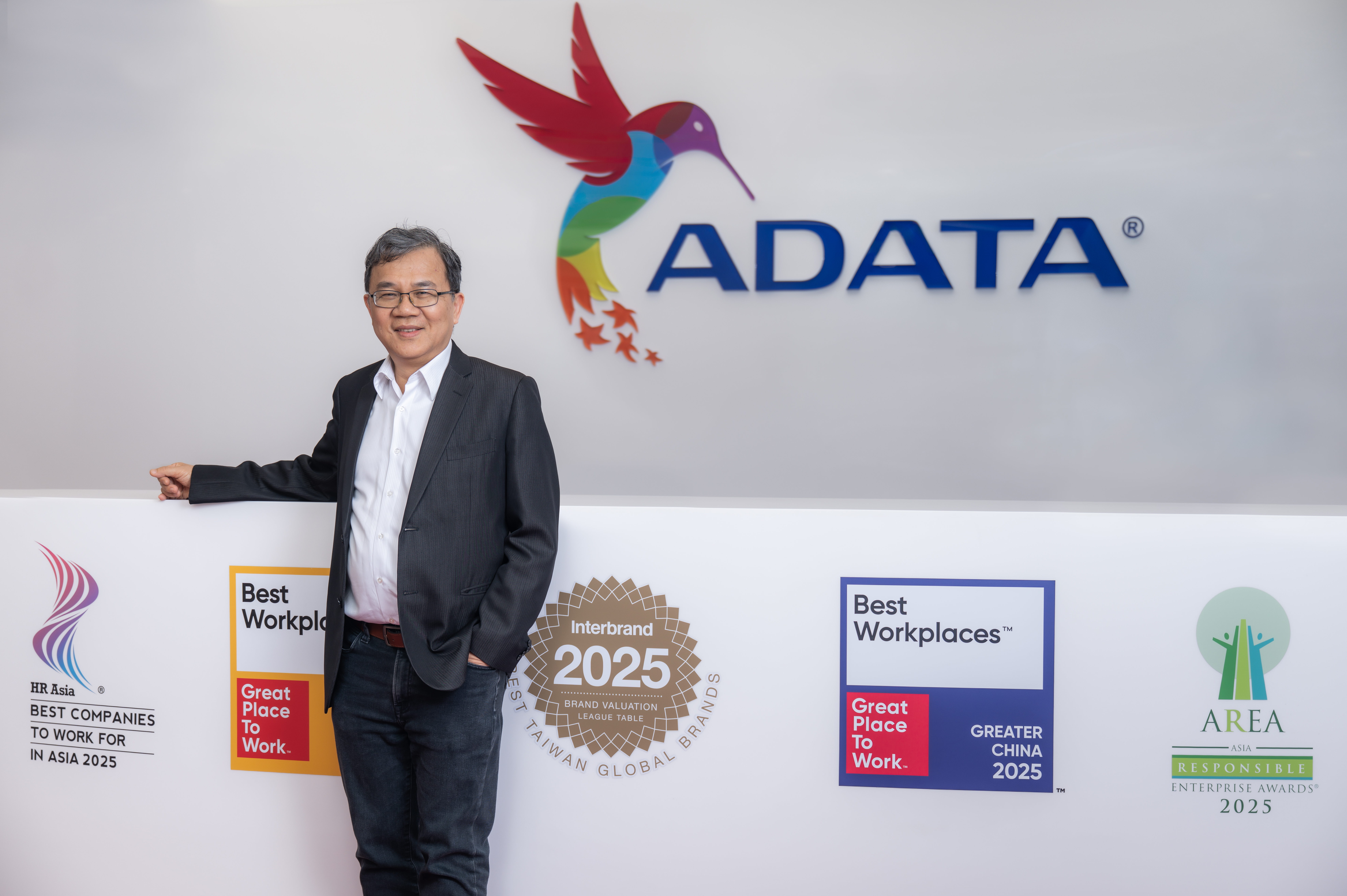
▲ Lin emphasized that ADATA has already initiated on-site implementations with numerous medical centers. Beyond deploying AMRs for practical tasks such as disinfection, ward rounds, and logistics in nursing stations and operating rooms, the company is integrating workflows with hospital nursing units, IT departments, and administrative sectors. The next step will involve interfacing with Hospital Information Systems (HIS) and Nursing Information Systems (NIS).
More importantly, ADATA utilizes NVIDIA Omniverse and the NVIDIA Cosmos™ world foundation model within these environments to resolve the inefficiencies of traditional methods, where capturing physical photos across different sites was both time-consuming and slow. This not only ensures that ADATA’s AMRs are adaptable to diverse medical settings in the future but also effectively accelerates the paradigm shift in smart healthcare.”
Advantech and ADATA: A Cultural Fit and the Power of “One Brand Shopping”
Advantech has long been ADATA’s closest partner. Since the launch of the first-generation C-Rob AMR, ADATA has been a loyal user of Advantech’s AI computing platforms, later fully adopting the MIC-732-AO Edge AI platform. Lin candidly shared that during the development of their AMRs, ADATA conducted thorough market evaluations of AI industrial PCs. After rigorous testing of quality, performance, power consumption, and durability in medical disinfection environments, the Advantech MIC-732-AO emerged as the final choice.
Lin noted that Advantech possesses solid experience in industrial PC development and deployment. Beyond high performance and environmental tolerance, its “out-of-the-box” readiness and pre-integration with the NVIDIA Isaac™ allow ADATA to focus entirely on application-layer development. Furthermore, as long-term partners, Advantech’s technology-driven and customer-oriented business philosophy aligns perfectly with ADATA’s corporate culture.
Advantech’s products have an unparalleled reputation for quality and reliability. This allows ADATA to immediately rule out hardware issues when troubleshooting, enabling them to identify and resolve problems quickly. Additionally, the Advantech MIC Jetson Platform series comes with a two-year global warranty and an expected service life of 5 to 10 years under normal use.
These advantages give ADATA the confidence to deploy AI training and inference models onto the platform. Supported by this system, ADATA can accelerate development timelines, ensure smooth and reliable field operations, and maintain low long-term maintenance costs.
Regarding the value Advantech brings to its clients, Ming-Chieh Chi, Business Development Manager at Advantech, stated that they first ensure customers have access to the latest NVIDIA hardware and software technologies. Secondly, Advantech’s in-house production—ranging from computing power and communication to controls and sensors—provides a powerful “One Brand Shopping” benefit. This enables Advantech to deliver fully integrated, tailor-made solutions directly to the customer.
Developing Modular Solution Kits: Poised to Expand Beyond Healthcare
ADATA has already implemented the NVIDIA ReMEmbR architecture, which enhances a robot’s reasoning and mobility. By combining Vision-Language Models (VLM), Large Language Models (LLM), and speech recognition technology, healthcare professionals can use intuitive voice commands to direct the ADATA AMR inspection system, providing medical clients with a revolutionary user experience.
In light of the interest surrounding OpenClaw, NVIDIA has launched NemoClaw. Regarding this development, Lin believes that Taiwan can leverage its vertical industry know-how to create Agentic AI applications tailored for various sectors. ADATA is particularly optimistic about the synergy between Agentic AI and Physical AI (embodied in ADATA’s AMRs). The company’s 2026 product roadmap focuses on merging these two—effectively moving capabilities like OpenClaw from the cloud or local edge directly onto AMR robots to develop fully autonomous AI AMRs.
Moving forward, ADATA plans to deepen its powerful partnership with Advantech. By integrating “AI + Computing Power + Powertrain Systems,” the two companies are co-developing Sales Kit modular solution packages. Much like building blocks, these kits will allow for tailored AMR solutions based on specific corporate needs or site requirements. This vision demonstrates ADATA’s determination to expand from healthcare into smart manufacturing, logistics, smart factories, and industrial inspections.
Echoing the “Five-Layer Cake” and “Four Stages of AI”: Proving Physical AI Has Landed
At the GTC 2026 conference, NVIDIA CEO Jensen Huang reiterated the “Five-Layer Cake” vertical integration strategy (Energy, Chips, Infrastructure, Models, and Applications) and the four stages of AI development (shifting from Perception AI and Generative AI to Agentic AI and Physical AI).
Over the years, ADATA Group has aggressively expanded from memory and motor powertrain systems into the AI domain. The company has evolved from its first-generation Perception AI AMRs, limited to single-point disinfection, to a new generation of autonomous disinfection and smart patrol AMRs capable of complex, multi-tasking AI functions. This development curve—moving from Perception AI to Physical AI—perfectly aligns with the frameworks presented by Jensen Huang at GTC 2026. Through the deep collaboration between Advantech and ADATA, it serves as living proof that Physical AI has successfully taken root in real-world applications.
To learn more about Advantech AI solutions 👉 Edge AI Systems – Advantech
To consult with an Advantech expert 👉 Contact us
(Image source: TechNews)