Popular Keywords



About TrendForce News
TrendForce News operates independently from our research team, curating key semiconductor and tech updates to support timely, informed decisions.
[News] U.S. Plans to Ban Select Chinese Chips in Federal Procurement from Dec. 2027, Lifting Korean Chipmakers
The U.S. is proposing further restrictions on Chinese semiconductors. According to Hankyung, citing sources from legal analysis platform Lexology, the Federal Acquisition Regulatory Council (FAR) has proposed a rule that would ban federal procurement of products, components, and services containing semiconductors manufactured by China’s largest foundry, SMIC, as well as Chinese memory chipmakers. If adopted, the rule would take effect on December 23, 2027.
The amendment is open for public comment until April 20, meaning the restrictions are not yet finalized. However, the proposal signals the administration’s intent to reduce the presence of Chinese components in products supplied to the U.S. government, Wccftech notes.
If the amendment is finalized, U.S. companies would no longer be allowed to supply the federal government with servers, PCs, smartphones, or TVs containing chips fabricated on SMIC’s foundry lines or memory produced by Chinese chipmakers. In effect, Chinese semiconductors would be excluded from the U.S. public procurement market, estimated at about $850 billion annually, as Hankyung highlights.
U.S. Moves to Curb IT Firms’ Shift Toward Chinese Chips
The Hankyung report notes that the committee’s move to exclude Chinese semiconductors was partly intended to curb attempts by U.S. companies to source lower-cost Chinese chips. As the report indicates, amid the AI-driven semiconductor supercycle, DRAM and NAND prices have more than doubled year over year since the start of this year, while supply has remained tight. As a result, smartphone makers and PC and server vendors—including Dell and HP—have reportedly been turning to Chinese alternatives. Notably, Commercial Times, citing Wccftech, reports that Apple is evaluating memory products from major Chinese suppliers for potential use as early as the iPhone 18 series and MacBooks.
With the U.S. federal government now proposing to exclude Chinese memory chips, analysts cited by Hankyung expect that U.S. companies will face tighter constraints when attempting to procure Chinese semiconductors.
Restrictions on Chinese Chips May Reinforce Korea’s Memory Lead
The proposed move could benefit Korean chipmakers. As Hankyung indicates, with the committee effectively warning against the adoption of Chinese semiconductors, Chinese chipmakers may face greater hurdles in expanding into global markets. As a result, the report notes that in the memory sector, the dominance of South Korean chipmakers Samsung Electronics and SK hynix could persist for a considerable period.
Industry sources cited by the report said there had been growing concerns that if Chinese semiconductor companies improved their profitability during the memory boom, they could accelerate their expansion into global markets. However, the proposed U.S. regulations could effectively give South Korean chipmakers more time to maintain their market lead.
Read more
- [News] Apple Reportedly Eyes Chinese Memory as Leverage Against Samsung, SK hynix Amid Rising Costs
- [News] Chinese Memory Makers, Led by CXMT, Advance in the DRAM Market, Challenging Samsung, SK Hynix, and Micron
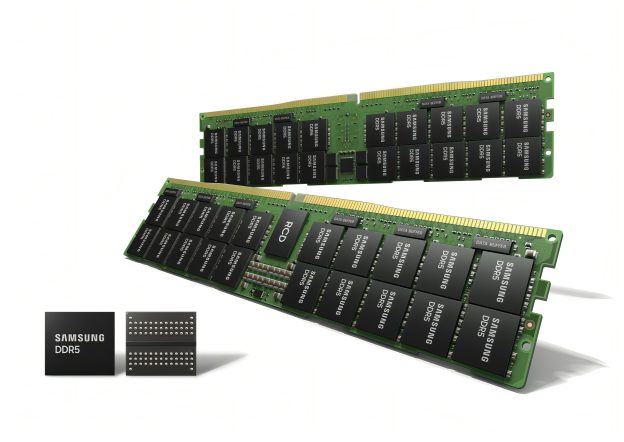
(Photo credit: Samsung)
Please note that this article cites information from Hankyung, Lexology, Commercial Times, and Wccftech.