Popular Keywords



About TrendForce News
TrendForce News operates independently from our research team, curating key semiconductor and tech updates to support timely, informed decisions.
[News] US Reportedly Mulls Tariff Exemptions for Amazon, Google, Microsoft on TSMC-Made Chips
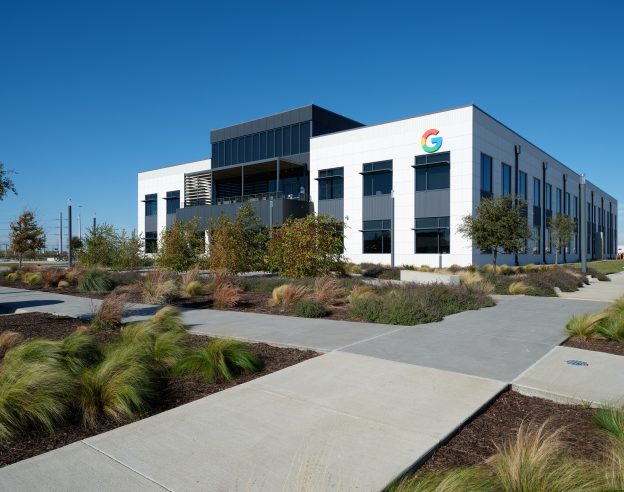
While many details of the semiconductor duties remain unclear, one certainty is that in January the Trump administration slapped a 25 percent levy on certain AI chips from AMD and NVIDIA. Now, the Financial Times reports that Washington plans to exempt major tech players like Amazon, Google, and Microsoft as they race to expand the data centers powering the AI boom.
Notably, the report, citing sources familiar with the matter, notes that the Commerce Department is preparing to grant US hyperscalers tariff carve-outs, contingent on investment commitments from foundry giant TSMC.
According to Financial Times, under the reported new plan, TSMC would be able to grant exemptions for its US clients from the upcoming duties. However, the scale of the potential rebate program would be tied to the recent US-Taiwan trade deal, the report explains, adding that in return for a $250 billion investment in the US chip sector, the White House has agreed to cut tariffs on imports from Taiwan to 15 percent.
TSMC 3nm AI Chips Powering Big Tech
As previously reported by Commercial Times, many of these tech giants rely on TSMC to manufacture their in-house AI chips. Microsoft’s newly launched Maia 200 is built on TSMC’s 3nm process, while Google’s TPU v7e and v8p, Amazon’s Trainium 3, and Meta’s MTIA v3 are all produced on the 3nm node, the report added.
Financial Times suggests that the intricate plan aims to push the world’s top chipmaker to ramp up production in the US. TSMC, which supplies the bulk of advanced AI chips, still carries out most of its manufacturing in Taiwan—but has committed $165 billion to expand capacity on American soil.
Based on the White House’s original plan, Taiwanese firms constructing semiconductor plants in the US would be allowed to import up to 2.5 times the planned capacity of the new facilities tariff-free during the build-out, according to a Commerce Department outline of the trade deal cited by the report.
For Taiwanese companies with existing US plants, the limit would be 1.5 times their current capacity, Financial Times adds.
Read more
- [News] Google Reportedly to Nearly Double 2026 CapEx as Cloud Revenue Jumps Nearly 48%
- [News] Google Led TPU Innovation with Patent Spike; Broadcom, MediaTek Reportedly Boost Reserved Wafers
(Photo credit: Google)
Please note that this article cites information from Financial Times and Commercial Times.