Popular Keywords



About TrendForce News
TrendForce News operates independently from our research team, curating key semiconductor and tech updates to support timely, informed decisions.
[News] HBM Expert Says Korea–China Memory Gap Exceeds 5 Years and May Even Widen Amid EUV Constraints
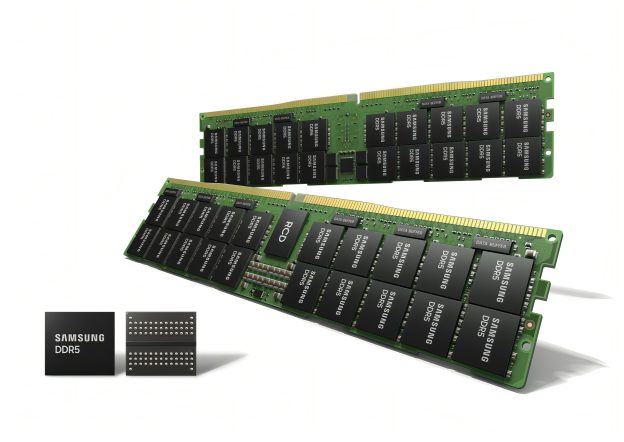
Is China closing the gap with South Korea’s memory giants? An industry veteran says the gap may be wider than assumed. According to The Korea Herald, Shim Dae-yong, a professor of next generation semiconductor at Dong-A University, said the technology gap between Chinese memory makers and their South Korean counterparts is widely underestimated and may even be widening, adding that the difference is not two or three years but, in his view, exceeds five.
Widely regarded as a veteran DRAM expert, Shim spent 26 years at SK hynix, where he led core DRAM technology development and played a key role in the early advancement of HBM, the report adds.
At the core of the issue, Shim notes, is a structural limitation facing China’s advanced DRAM development: restricted access to extreme ultraviolet (EUV) lithography. As the report explains, EUV tools have become essential for DRAM production at 10nm-class nodes and beyond.
Where the DRAM Gap Widens
For context, the report explains that DRAM processes typically evolve from 1x, 1y, and 1z nodes (sub-20nm) to 1a, 1b, and 1c (10nm-class). While multi-patterning can extend the use of legacy lithography tools to a certain extent, as Micron did at the 1a node, EUV becomes effectively indispensable from 1b onward, Shim points out.
The report also notes that yield remains a critical hurdle for Chinese firms, as achieving commercially viable cost competitiveness typically requires yields of around 80 to 90 percent.
3D Stacking Moves the Pressure Point
Shim indicates that China’s alternative is to focus on advanced 3D stacking, which, in the absence of EUV lithography, may be the only viable route to narrowing the gap with Samsung Electronics, SK hynix, and Micron. However, he also notes that this approach merely shifts the bottleneck to other areas, particularly materials and advanced packaging.
As the report notes, key materials used in HBM, including underfill and epoxy molding compounds, are largely controlled by Japanese suppliers such as Resonac and Namics. He adds that even Samsung Electronics and SK hynix have spent years working to localize these critical inputs.
Limits of Co-Development Experience
Beyond constraints on EUV access and materials, the report, citing Shim, notes that Chinese memory makers also lack the depth of collaborative experience that South Korean memory companies have built over decades with major technology firms such as Microsoft, Google, Apple, and NVIDIA. Shim emphasizes that these companies do not merely adopt memory products but work closely with suppliers to co-develop and validate them across new system architectures, a process that, as the report points out, cannot be replicated in a short period of time.
Read more
- [News] China’s Memory Sector Booms: 13 A-Share Firms Project Triple-Digit Profit Growth in 2025
- [News] Huawei Unveils Enterprise Storage Refresh: A Series Dorado Slashes HBM Dependency via UCM
(Photo credit: Samsung)
Please note that this article cites information from The Korea Herald.