Popular Keywords



About TrendForce News
TrendForce News operates independently from our research team, curating key semiconductor and tech updates to support timely, informed decisions.
[News] Meta’s MTIA-3 AI Chip Reportedly Tipped for 2H26 Debut, Built on TSMC 3nm with GUC Support
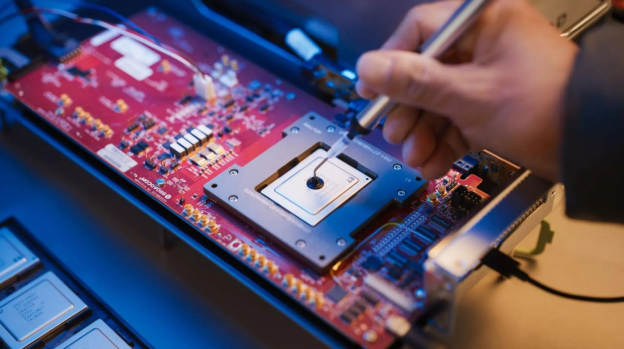
As Meta lifts its 2026 capital spending to US$115–135 billion—nearly double its 2025 outlay—CNBC reports that the company’s investment push remains in full swing. Commercial Times notes that Meta’s sustained capex momentum is directly driving stronger demand for AI servers and ASICs (application-specific integrated circuits).
Amid Meta’s push to develop in-house AI chips, supply chain sources cited by Commercial Times revealed that MTIA-2 is already in production and slated to debut in H1 2026. The chip is built on TSMC’s 3nm process and uses the foundry leader’s advanced CoWoS-S packaging, with compute and I/O design services provided by Broadcom, Commercial Times adds.
Notably, Commercial suggests that following MTIA-2, MTIA-3 is set for a H2 2026 debut, with TSMC affiliate GUC handling back-end packaging and wafer processing. Despite also using TSMC’s 3nm process and taping out in Q3 2025, MTIA-3 reportedly features a more complex design with extra I/O and an additional SoC. The larger reticle, as per the report, limits CoWoS packaging to just eight chips per wafer, leading Meta to rely on GUC’s expertise for execution.
TrendForce observes that in the 2026 AI server market, shipment growth will mainly come from North American CSPs, government sovereign cloud projects, and the increasing development of in-house ASICs and edge AI inference solutions by large CSPs. Notably, the share of ASIC-based AI servers is expected to reach 27.8% by 2026, the highest since 2023, as North American firms like Google and Meta expand their own ASIC efforts, according to TrendForce.
On the other hand, analysts cited by the Commercial Times report also expect Meta’s MTIA chips to significantly boost BMC (Baseboard Management Controller) usage, with each MTIA using around 23 BMC units, benefiting Taiwan’s ASPEED Technology.
Read more
- [News] Meta Reportedly Weighs Google TPU Deployment in 2027, Boosting Broadcom, Taiwan’s GUC
- [News] Meta Reportedly Teams Up with Broadcom, Taps Quanta for Next-Gen ASIC-powered AI servers
(Photo credit: Meta)
Please note that this article cites information from Commercial Times and CNBC.