[News] Micron Reveals Three Culprits Behind Memory Crunch—and Why It Won’t Ease Soon
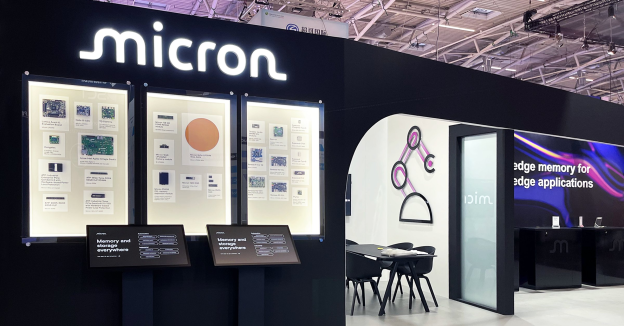
At its December 18 earnings call, Micron reportedly acknowledged that it is currently able to meet only around 55%–60% of core customer demand, while warning that the memory supply crunch is likely to persist beyond 2026. Here’s a closer look at the factors driving the tight supply, the ripple effects across the market, and why relief is unlikely in the near term.
Data Center Surge Drives Memory Crunch
To begin with, Micron said that customers’ accelerating AI data center build-outs over recent months have sharply boosted demand forecasts for memory and storage. The trend was also evident in Micron’s latest earnings. CNBC reported CEO Sanjay Mehrotra saying that server unit shipments grew in the “high teens” in 2025. Meanwhile, Micron posted $5.28 billion in cloud memory sales, more than doubling year over year.
Indeed, the current wave of hyperscaler spending shows no signs of easing, with TrendForce estimating that capital expenditures by the world’s top eight CSPs will surge 65% year over year in 2025. According to TrendForce, the trend is expected to continue among CSPs in 2026, with total CapEx projected to exceed US$600 billion—another 40% annual increase—highlighting the strong, long-term growth momentum behind AI infrastructure.
Data centers don’t just gobble GPUs and power—they also devour massive amounts of memory. In October, Samsung and SK hynix struck preliminary deals to supply memory for OpenAI’s colossal Stargate project. Reuters reports that OpenAI’s demand could reach 900,000 DRAM wafers per month, potentially 40% of global DRAM output.
Even the largest memory makers may struggle to keep up. Much of OpenAI’s demand is for high-value HBM—900,000 wafers per month would equal SK hynix’s entire quarterly HBM revenue, yet SK hynix currently produces only around 160,000 wafers per month, as per Maeli Business Newspaper. Micron’s HBM capacity, meanwhile, is projected to reach 60,000 wafers/month by late 2025, an earlier report from Chosun Daily suggested.
HBM Demand Surges, Micron Warns of DDR5 Resource Bottleneck
Micron also notes a crucial fact: the dramatic increase in HBM demand is further challenging the supply environment due to the 3-to-1 trade ratio with DDR5, and this trade ratio only increases with future generations of HBM.
Interestingly, while concerns have emerged over the phasing out of DDR4 and the conversion of legacy production lines to HBM—raising fears of tighter traditional DRAM supply—a recent surge in general memory prices could change the equation. According to TechPowerUp, as Samsung transitions from HBM3/HBM3E to HBM4, the company is reportedly reallocating part of its HBM output back to standard DRAM to address rising demand.
The report adds that internal plans include converting roughly 30–40% of Samsung’s 10 nm-class, fourth-generation 1a DRAM capacity into 10 nm-class, fifth-generation 1b lines for general-purpose memory, covering DDR5, LPDDR5X, LPDDR6, and GDDR7. This strategic shift aims to ease supply pressure on mainstream memory while supporting the HBM4 ramp.
Cleanroom Constraints
Micron also highlights a key factor behind tight memory supply: while additional cleanroom space is essential to meet soaring demand, construction lead times are stretching longer across regions.
TrendForce confirms this trend, noting that DRAM cleanroom capacity remains constrained industry-wide. Only Samsung and SK hynix can modestly expand their lines, while Micron must wait for its new ID1 fab in the U.S., which isn’t expected to start operations until 2027. Consequently, even with Micron planning to raise its FY26 CapEx from $18 billion to $20 billion, the company projects only about a 20% increase in DRAM and NAND bit shipments for calendar 2026.
With demand rising, HBM using a portion of DDR5 capacity, and new fabs still a few years away, Micron indicates that the memory supply situation is influenced by structural factors rather than short-term cycles. For customers, this suggests that supply constraints could persist, pricing may remain elevated, and long-term agreements could be increasingly important.
Read more
- [News] Samsung CEO Roh Reportedly to Meet Micron in Rare CES Meeting Over Tight Mobile DRAM Supply
- [News] Micron Hikes CapEx to $20B with 2026 HBM Supply Fully Booked; HBM4 Ramps 2Q26
(Photo credit: Micron)
Please note that this article cites information from Micron, CNBC, Maeli Business Newspaper, Chosun Daily and TechPowerUp.