Popular Keywords



About TrendForce News
TrendForce News operates independently from our research team, curating key semiconductor and tech updates to support timely, informed decisions.
[News] Silicon Photonics Momentum Builds: Samsung Ramps R&D in Singapore, UMC Teams With IMEC
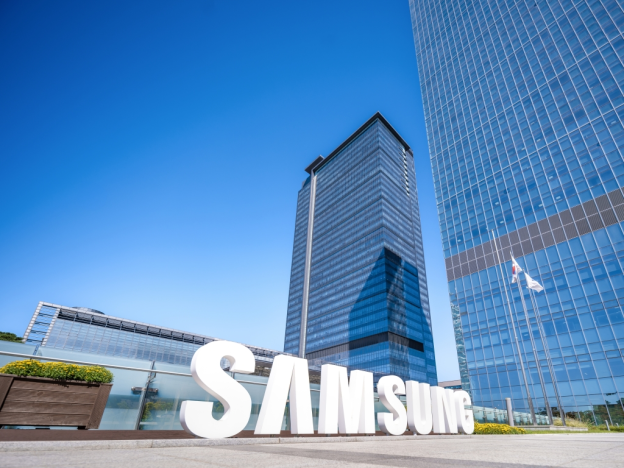
With AI compute demands soaring, silicon photonics is emerging as a next-generation technology poised to reshape the landscape. According to Hankyung, sources say that Samsung Electronics’ Device Solutions (DS) Division has designated the technology as a future strategic priority and begun recruiting experts for its Singapore-based R&D center, led by Vice President King-Jien Chui, a former TSMC executive. The report highlights that Samsung is expanding its team in Singapore and working with Broadcom to move the technology toward commercialization.
As the report indicates, citing industry sources, Samsung’s 2027 target for CPO (Co-Packaged Optics) commercialization suggests that its real contest with TSMC will begin at that point. By 2030—when silicon photonics is expected to be applied at the individual-chip level—the technology will likely become the central battleground of the foundry market. Although TSMC currently leads, Samsung is gearing up, viewing the technology as a key to attracting major foundry clients, the report adds.
UMC Steps Into Silicon Photonics With IMEC, Targeting 2027 Volume Production
Aside from Samsung, Taiwan’s UMC is also pushing forward in silicon photonics. According to Economic Daily News, sources say UMC is partnering with leading international R&D institute IMEC to expand into the sector, with trial production planned for 2026 and volume production targeted for 2027. Citing institutional investors, the report notes that UMC has long relied on mature nodes, limiting its growth potential. But because most silicon photonics platforms use 28nm and 22nm, UMC holds a natural advantage and is expected to move into higher-value, higher-margin product lines.
As Economic Daily News points out, the data-transfer demands of AI training and inference are rising so rapidly that traditional copper interconnects can no longer support the power and latency requirements of higher-end network switches. As a result, silicon photonics has emerged as the next-generation data-center technology. Starting with its Rubin architecture in 2025, NVIDIA will broadly adopt silicon photonics and CPO in AI servers.
TSMC Accelerates Silicon Photonics and Optical Interconnect Roadmap
TSMC has been a forerunner in silicon photonics. According to Liberty Times, the company’s COUPE (Compact Universal Photonic Engine) completed verification in the first half of 2025. NVIDIA’s Spectrum-X adopts this technology. TSMC is expected to integrate silicon-photonics-based CPO directly into CoWoS packaging next year and achieve mass production, as Liberty Times highlights.
The foundry giant has outlined its roadmap at its Open Innovation Platform Ecosystem Forum. According to HardwareLuxx, the company is collaborating with NVIDIA and Broadcom on substrate-level optical connections. As the next step in its roadmap, the logic module and optical unit will move even closer together by being integrated directly on the interposer.
Read more
- [News] Taiwan Chip Giants Capitalize on CPO Boom as MediaTek, TSMC Race Ahead on SerDes
- [News] Silicon Photonics in the Spotlight: TSMC Lifts the Curtain on COUPE at SEMICON Taiwan
(Photo credit: NVIDIA)
Please note that this article cites information from Hankyung, Economic Daily News, Liberty Times, and HardwareLuxx.