Popular Keywords



About TrendForce News
TrendForce News operates independently from our research team, curating key semiconductor and tech updates to support timely, informed decisions.
[News] DRAM Quotes Reportedly Shift to Monthly as Samsung Largely Halts Contracts
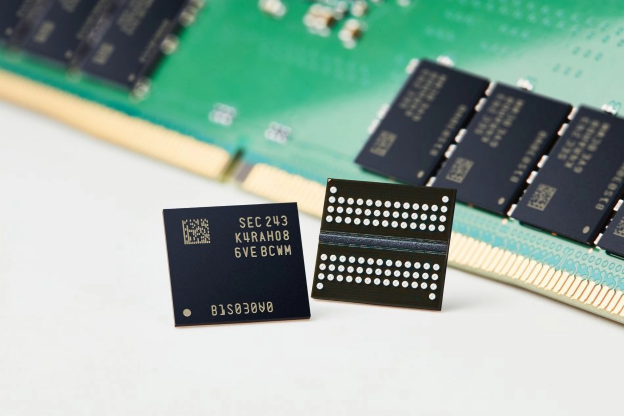
As hyperscalers double down on AI spending, memory shortages are tightening fast—and the suspension of DRAM quotes is spreading across the market. Earlier in October, Commercial Times reported that major Korean and U.S. chipmakers had paused new enterprise quotes for a week. Now, market rumors suggest Samsung might have paused DDR5 contract pricing, with other suppliers possibly following suit and quotes unlikely to return before mid-November.
TrendForce observes that while some suppliers are still issuing quotes, most are doing so passively, with very limited deals closed in October. The pricing cycle has also shifted from quarterly frameworks to monthly quotes, according to TrendForce.
TrendForce adds that currently, Samsung has largely halted contract offers, while other suppliers have adopted a wait-and-see stance, fueling a bidding atmosphere that continues to drive DRAM prices sharply higher.
TrendForce’s latest investigations show that server DRAM contract prices are strengthening in 4Q25, driven by ongoing data center expansion among global CSPs. This momentum is lifting overall DRAM pricing. Thus, TrendForce has revised its 4Q25 outlook for conventional DRAM pricing upward, from an earlier forecast of 8–13% growth to 18–23%, with a strong likelihood of further upward revision.
Notably, TrendForce highlights that thanks to server demand remaining strong, DDR5 contract prices are expected to maintain an upward trajectory throughout 2026, especially in the first half of the year.
AI Demand Strains HBM & DDR5, Silicon Motion CEO Warns
This echoes the perspective of NAND flash controller leader Silicon Motion. Citing CEO Wallace C. Kou, TechNews reports that the current memory crunch is being driven by explosive growth in AI inference demand, hitting high-bandwidth memory (HBM), NAND Flash, and hard drives (HDD) all at once.
Kou highlighted that HBM demand has soared to unprecedented levels. In response, DRAM makers are shifting capital expenditure toward DDR5 and HBM production, tightening overall capacity. HBM faces serious structural limits: reaching DDR5-level density reportedly requires three times the wafer output. At the same time, DDR5 itself is also grappling with rising prices and shortages, according to TechNews, citing Kou.
As the report highlights, citing Kou, expanding advanced DDR production capacity, such as DDR5, requires massive investment and time. For example, increasing monthly wafer output by 10,000 units using 1b or 1c DDR technology would require roughly $10 billion in advanced technology capex, Kou added. With long equipment lead times and complex processes, capacity cannot be ramped up quickly, further fueling the supply crunch.
Read more
- [News] SK hynix Reportedly Negotiates Price Adjustments with Customers Following Micron, Samsung
- [News] Samsung Reportedly Plans Q4 Memory Price Hikes: DRAM Up 30%, NAND Up 10%
- [News] Micron Freezes Prices as Inference AI Fuels Surge in SSD Demand and Supply Shortages
(Photo credit: Samsung)
Please note that this article cites information from Commercial Times and TechNews.