Popular Keywords



About TrendForce News
TrendForce News operates independently from our research team, curating key semiconductor and tech updates to support timely, informed decisions.
[News] China Expands Rare Earth Curbs, Subjects 14nm Logic and 256-Layer Memory to Case-by-Case Review
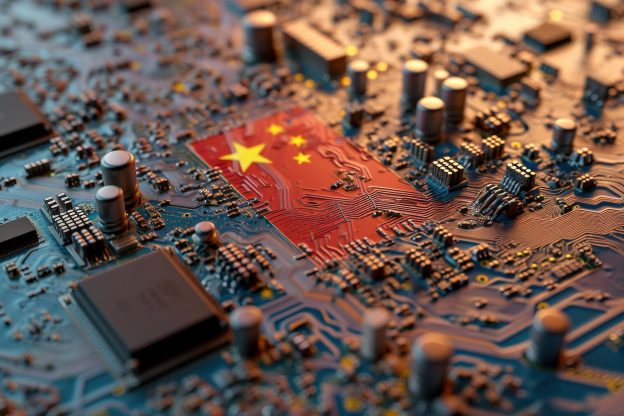
Shortly after U.S. lawmakers pushed for wider chip export restrictions to China—following a report that Chinese chipmakers bought $38 billion in advanced equipment last year—Beijing responded. On October 9, China’s Ministry of Commerce announced sweeping export controls on items deemed critical to national security, with rare-earth taking center stage, according to EE Times China.
The new rules, which have raised immediate concerns, require case-by-case reviews for semiconductors and AI, as per the announcement by China’s Ministry of Commerce. Notably, export applications involving 14nm-and-below logic chips, 256-layer-and-above memory chips, related manufacturing and testing equipment, and AI tech with potential military use will now be scrutinized by MOFCOM to prevent sensitive technology from falling into the wrong hands.
TrendForce notes that China’s latest rare earth export restriction will impact HDD production of Seagate and WDC, as the spindle motors rely on these materials.
Key Rules and Timeline
As highlighted by EE Times China, the measures now cover items produced overseas using Chinese-origin technologies in rare earth mining, smelting and separation, metal refining, magnetic material production, and recycling of rare earth secondary resources, all subject to control under export codes 1E902.a and 1E902.b.
Simply put, any foreign-made item requires a license if Chinese-origin rare earth materials account for 0.1% or more of its value. This covers technologies for samarium-cobalt, neodymium-iron-boron, and cerium magnets, as well as rare earth calcium boron oxide materials and production technologies for rare earth metals and alloys.
According to EE Times China, some provisions of the new regulations took effect immediately upon publication, while others are set to begin on December 1, 2025. The South China Morning Post adds that even rare earth products produced overseas using Chinese-origin elements or technologies will be subject to restrictions starting December 1.
According to the announcement, cited by EE Times China, certain provisions are expected to take effect December 1, 2025, while export controls on specific Chinese-origin items became effective immediately upon publication.
Impact and Strategic Significance
As Reuters points out, China’s stricter rare earth export controls not only broaden restrictions on processing technologies but prohibiting unauthorized foreign partnerships and explicitly targeting defense and semiconductor end-users abroad. The latest announcement builds on sweeping April controls that triggered global supply disruptions before bilateral agreements with Europe and the U.S. restored shipments, the report adds.
Dominating over 90% of global processed rare earth and magnet production, China controls critical materials essential to everything from electric vehicles and jet engines to military radar systems, Reuters notes, adding the 17-element group has become a key battleground in technological competition.
The South China Morning Post notes the measures represent a “major upgrade” to Beijing’s rare earth export controls, expanding oversight from raw materials to technology and intellectual property—a step expected to strengthen China’s leverage ahead of critical U.S. negotiations.
The report adds that while these restrictions are unlikely to disrupt China’s own production, they will deepen foreign dependence on Chinese know-how.
Read more
(Photo credit: FREEPIK)
Please note that this article cites information from EE Times China, Reuters, South China Morning Post and China’s Ministry of Commerce.