[News] Trump Demands CEO Lip-Bu Tan’s Ouster — Focus on U.S. Manufacturing Rift and Intel’s Future
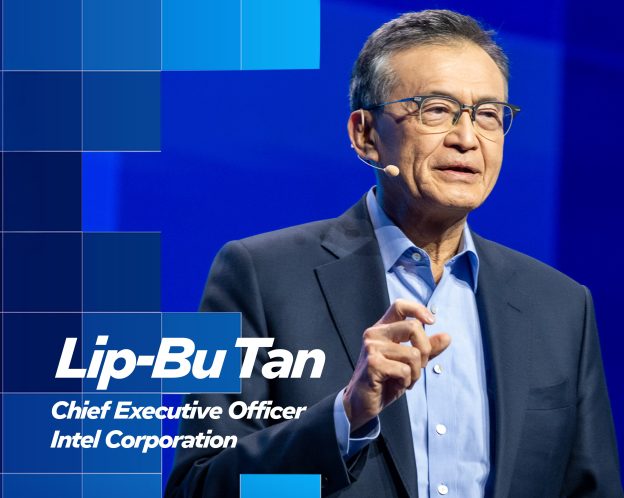
Shortly after EDA giant Cadence pleaded guilty and agreed to pay over $140 million for illegal sales to China, Republican Senator Tom Cotton sent a letter to Intel’s board questioning CEO Lip-Bu Tan’s China ties — noting he led Cadence until 2021, as per Reuters. Later, President Trump blasted Tan on social media as “highly conflicted” over links to Chinese firms and demanded his immediate resignation.
Reuters reported in April that Tan, best known as a veteran investor and current chairman of Walden International, has deep ties to China. The report suggested that from 2012 to 2024, he funneled at least $200 million into hundreds of Chinese chip and advanced manufacturing firms. Notably, he invested in SMIC as early as 2001—just a year after its founding—served on its board until 2018, and fully exited the stake in 2021, as per Reuters.
Tan’s Reply
Shortly after Trump’s accusation, both Intel and Tan made a statement on Intel’s website. Tan said that there has been a lot of misinformation circulating about his past roles at Walden International and Cadence Design Systems, adding that over 40+ years in the industry, he has always operated within the highest legal and ethical standards. In addition, Intel is engaging with the Administration to address the matters that have been raised and ensure they have the facts, according to the statement.
Tan also noted that he fully shares the President’s commitment to advancing U.S. national and economic security, while the Board is fully supportive of the work they are doing to transform the company.
Behind these political flashpoints lies the real question for Intel: Lip-Bu Tan’s stance on U.S. manufacturing, how it reportedly clashes with Team Blue’s board, and what’s next for the chipmaker.
U.S. Manufacturing, but Outsourced?
As Wccftech points out, it is telling that President Trump praised former Intel CEO Andy Grove as probably the last worthy leader of the company. It makes sense—Grove was widely seen as a fierce champion of American manufacturing, famously penning the influential editorial How America Can Create Jobs, where he urged companies to create genuine opportunities for everyday Americans, as per the report.
While Intel has been cutting 15% of its workforce and slowing down its Ohio plant plans, CEO Tan’s approach seems to be clashing with Trump’s push to expand American manufacturing. In July, Tan warned that without securing external customers for Intel’s 14A node, the company might have to abandon advanced node manufacturing altogether.
However, according to The Wall Street Journal, Tan holds firm for Intel in staying in chip manufacturing, as he insists Intel’s foundry business is vital—not just for the company’s success but to keep the U.S. from depending on foreign chipmaking giants.
On the other hand, the report reveals that Board chairman Yeary, a former banker, pushed to spin off Intel’s foundry business—courting giants like NVIDIA and Amazon—and even considered selling to TSMC, though the deal fell through. The stark contrast reveals deep divisions at Intel’s top over its manufacturing direction, as per the report.
Board Clashes Stall Fundraising and AI Ambitions
While divesting non-core businesses like Altera and Network and Edge Group (NEX), Intel, according to The Wall Street Journal, is seeking new ways to strengthen its balance sheet, lining up several Wall Street banks for a multibillion-dollar capital raise to invest in its fabrication plants and spark fresh momentum.
However, the plan has reportedly been delayed—management aimed to start with the late July earnings report, but some board members, including Yeary, pushed to slow the timeline, possibly postponing it until 2026.
Team Blue is also trying to push ahead in AI. As noted by IT Home, Tan suggests that Intel will unveil its AI strategy in the coming months, prioritizing inference and agentic AI. According to Tan, the company wants to explore how to leverage the x86 lineup and accelerators to build the compute platform of the future.
The direction aligns with The Wall Street Journal report, which discloses that Intel had been eyeing an AI business acquisition. But the board dragged its feet, and now another tech company seems set to snap up the target, the report adds.
Next for Intel
Notably, The Wall Street Journal reveals that before President Trump’s call for Tan to step down, Tan and Commerce Secretary Howard Lutnick had a follow-up conversation after their initial April meeting and planned to meet again later this month. Lutnick reportedly told Tan that the administration would back Intel if it presented realistic plans to secure major clients like Apple.
What’s next for Intel? Tesla is reshaping its Dojo supercomputer supply chain, bringing in Samsung Electronics for chip fabrication and Intel for specialized packaging, moving away from sole reliance on TSMC, as ZDNet reports. However, Bloomberg later reveals Tesla is disbanding its Dojo team and its leader is leaving, delivering a major setback to Tesla’s in-house chip ambitions and casting uncertainty over Intel’s role in the project.
For Intel, the real test lies not only in the success of its 18A and 14A process nodes but also in whether it can capitalize on the geopolitical climate to secure more U.S. orders, positioning itself as a key player amid rising tensions.
Read more
- [News] Intel 18A Yield Reportedly Just 10% at Risk Production, Casting Doubt on Panther Lake Plans
- [News] Intel Earnings Call Bombshell: Could Exit Advanced Nodes if 14A Fails, Eyes TSMC Outsourcing Beyond 18A
(Photo credit: Intel)