





 Download Report
 Contact Us
2026 Outlook: Microsoft and Meta’s AI Capital Strategy and Infrastructure Footprints

Last Modified
2025-12-15

Update Frequency
Aperiodically

Format
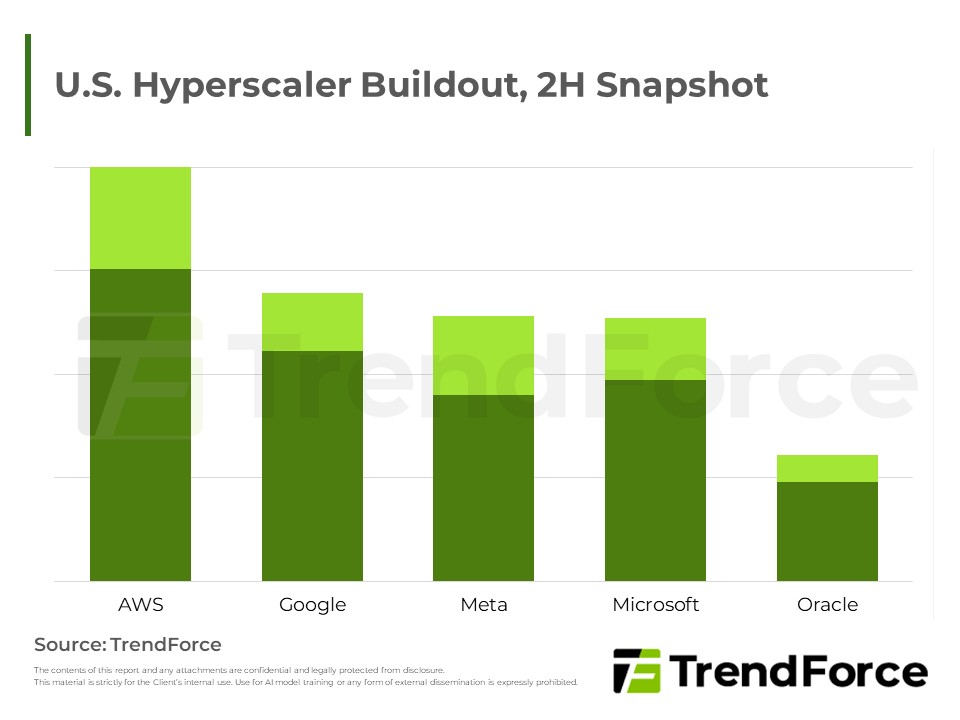
Microsoft and Meta are accelerating AI infrastructure. Microsoft balances capacity constraints via leasing, trading margins for growth. Meanwhile, Meta shifts to an aggressive strategy, leveraging rapid deployment and open-source models to secure future dominance.
Key Highlights
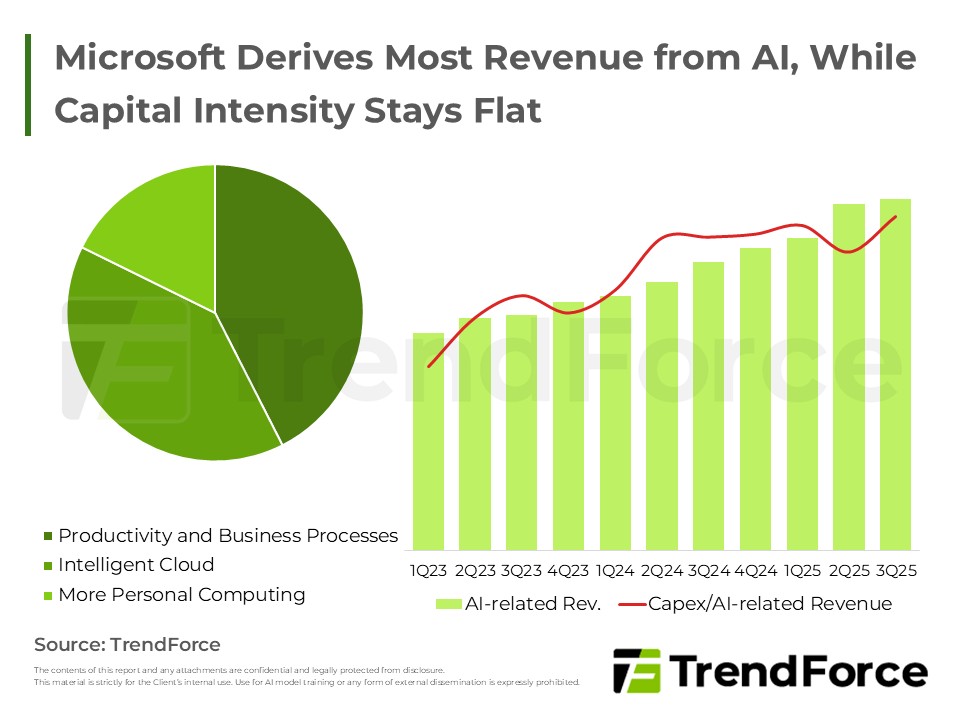
- Microsoft's Capacity Strategy: Microsoft uses third-party leasing to manage rapid AI revenue growth and capacity limits. While this impacts gross margins, the company is balancing leasing with self-built expansion.
- Meta's Strategic Shift: Moving from efficiency to aggressive investment, Meta strengthens its position by restructuring ad systems with AI and utilizing open-source models to commoditize the market.
- Rapid Deployment: Meta prioritizes speed by adopting industrial-grade structures for data centers, aiming for massive capacity release in the near future.
Table of Contents
- Introduction
- Microsoft and Meta’s Recent Major Investments Overlap Significantly in Location
- The Hidden Computing Powerhouse: Microsoft's Invisible Expansion in the AI Investment Plateau Period
- Microsoft Derives Most Revenue from AI, While Capital Intensity Stays Flat
- Mount Pleasant Phase 1 Goes Live Next Year, Adding 450MW to Microsoft's Capacity
- Meta Races to Catch Up in the AI Arms Race Despite Not Selling Cloud Services
- Meta's Revenue Is Heavily AI-Driven, While Capital Intensity Rises Sharply
- Meta Is Building Its Largest Data Center, Hyperion, Through a Joint Structure
<Total Pages: 9>
Sector: AI Server / Data Center

Spotlight Report
-

DRAM Monthly Datasheet Oct. 2026
2026/10/16
Semiconductors
EXCEL
-

NAND Flash Monthly Datasheet Oct. 2026
2026/10/15
Semiconductors
EXCEL
-

Global Memory Supply-Demand Divergence: Analyzing 2027 DRAM Structural Tightness and NAND Flash Oversupply
2026/07/28
Semiconductors
PDF
-

4Q26 Memory Price Forecast
2026/09/24
Semiconductors
PDF
-

Memory Market Outlook: 2026-2027 DRAM & NAND Revenue and Capex Analysis
2026/10/01
Semiconductors
PDF
-

DRAM Contract Price Aug. 2026
2026/08/31
Semiconductors
PDF
AI Server PackageRelated Reports

Download Report
55,000

Membership
Spotlight Report
-
DRAM Monthly Datasheet Oct. 2026
2026/10/16
Semiconductors
EXCEL
-
NAND Flash Monthly Datasheet Oct. 2026
2026/10/15
Semiconductors
EXCEL
-
Global Memory Supply-Demand Divergence: Analyzing 2027 DRAM Structural Tightness and NAND Flash Oversupply
2026/07/28
Semiconductors
PDF
-
4Q26 Memory Price Forecast
2026/09/24
Semiconductors
PDF
-
Memory Market Outlook: 2026-2027 DRAM & NAND Revenue and Capex Analysis
2026/10/01
Semiconductors
PDF
-
DRAM Contract Price Aug. 2026
2026/08/31
Semiconductors
PDF