[News] Chinese AI Chipmakers Reportedly Hike Prices on HBM Costs, Huawei 950DT Up as Much as 50%
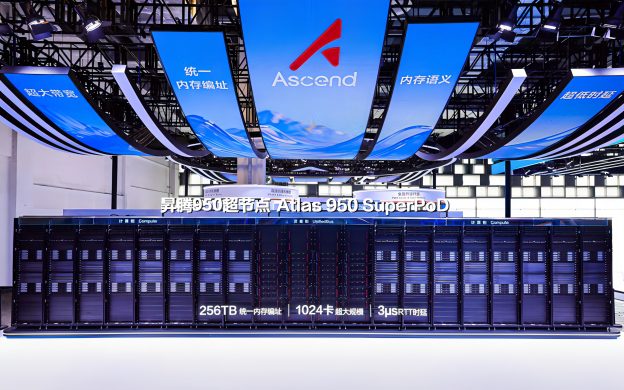
Rising memory costs are adding pricing pressure across China’s AI chip market, with major domestic suppliers reportedly raising prices for their latest products. According to Reuters, sources say Huawei has raised the indicated price of its Ascend 950DT accelerator card to more than RMB 250,000. Depending on contract terms, that represents a 20% to 50% increase from prices quoted to customers just two months ago. Huawei has publicly said the 950DT, its most advanced AI chip, will become available in 4Q26.
Huawei is not alone in raising prices. Sources say Cambricon has repriced its next-generation chip, tentatively called the 690, at 20% to 30% above levels indicated two months ago. Cambricon has yet to formally launch the 690, while its current flagship is the 590. Smaller rivals MetaX and Iluvatar CoreX have reportedly made similar increases.
HBM Shortage Drives Up Chinese AI Chip Costs
The price hikes highlight how a global HBM shortage is rippling through China’s AI industry. As the report points out, since Washington tightened export controls on certain advanced HBM products to China in December 2024, Chinese chipmakers have increasingly turned to grey-market channels to secure supplies. Sources say HBM obtained through these channels typically costs several times more than what buyers outside China pay. Since memory accounts for a significant share of an AI accelerator’s production cost, these higher costs are feeding directly into finished accelerator cards.
Against this supply backdrop, the report adds that Huawei has said its Ascend 950 series will use two proprietary HBM technologies: HiBL 1.0 for the 950PR and HiZQ 2.0 for the 950DT, though it has not disclosed where or how the memory is manufactured. Meanwhile, China is making progress in expanding its domestic HBM supply. According to Seoul Economic Daily, citing sources from The Information, CXMT has begun small-scale production of HBM3E and plans to significantly expand output in 2027. Chinese chip designers, including Cambricon and Alibaba’s T-Head, are reportedly testing the memory for use with their processors.
Notably, prices for Huawei’s earlier-generation products have also risen. As the Reuters report points out, the Ascend 950PR, which sold for around RMB 60,000 per card at the start of 2026, now costs more than RMB 80,000, an increase of about 30%. The older Ascend 910C board has also climbed from around RMB 90,000 at the beginning of the year to more than RMB 110,000.
AI Chip Shortage Forces Suppliers to Reshuffle Allocations
Tight supply is also prompting chipmakers to adjust how they distribute available products. As Reuters points out, Iluvatar CoreX has doubled its GPU shipments to TikTok developer ByteDance this year to 100,000 units. The company has also reportedly reassigned GPUs originally intended for its own use to meet ByteDance’s requirements. According to the report, Huawei remains ByteDance’s largest domestic chip supplier, followed by Cambricon and Iluvatar CoreX.
Competition for limited domestic AI chip supplies could intensify further. According to TechNews, citing Bloomberg, DeepSeek reportedly plans to deploy at least 160,000 Ascend 950DT chips at a large data center under construction in Inner Mongolia, primarily for AI inference.
Read more
- [News] Huawei Brings Forward Ascend 950DT Deployment to August, DeepSeek V4.2 Seen as Potential Early Adopter
- [News] China’s AI Chip Makers Make Waves: Cambricon 1H26 Net Profit Surges 123%, Moore Threads Eyes HK Listing
(Photo credit: Huawei)