[News] Huawei Reportedly Readies Mate 90, XT2 for Sept. with Tau Scaling Chips Said to Match 3nm Performance
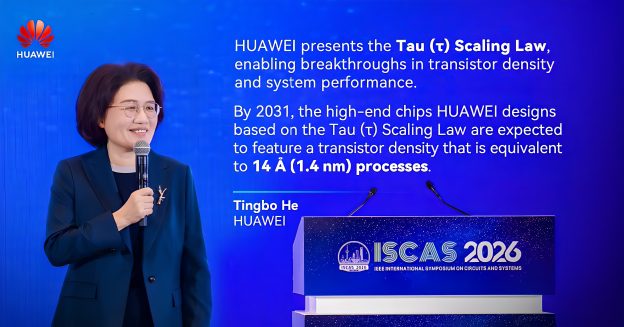
Huawei is preparing its next wave of flagship smartphones as it advances its in-house chip development. According to MyDrivers, sources say the company plans to unveil the Mate 90 series and next-generation Mate XT2 tri-fold smartphone in September. Both models will reportedly feature the Kirin 2026 chip, developed under Huawei’s Tau (τ) Scaling Law, with overall process performance said to be comparable to the 3nm level.
As the report indicates, Huawei executive He Tingbo previously disclosed that the flagship Kirin chip arriving this fall will be the first to adopt Huawei’s proprietary LogicFolding technology, significantly boosting core computing performance over the previous generation. The Kirin 2026 is said to achieve 53.5% higher transistor density than conventional 2D chip architectures, reaching 238 MTr/mm², while delivering a 41% improvement in performance-core energy efficiency and a 12.7% increase in peak operating frequency.
Beyond the chip upgrades, MyDrivers notes that the Mate XT2 adopts a new U-shaped folding design that fully encloses the display when folded for better protection. It also features a separate cover screen for calls, quick replies, and QR-code payments without unfolding the main display.
Notably, Mydrivers also highlights that launching two devices powered by the new Kirin chip within a single month could indicate that large-scale production and supply are progressing smoothly, easing concerns over potential shortages when the devices go on sale.
Huawei Accelerates Next-Generation Kirin Roadmap
Huawei is also accelerating its broader chip roadmap. According to MyDrivers, the Kirin 2026 and Kirin 2027 have completed tape-out and entered testing and validation, bringing them closer to consumer products. The report notes that the Kirin 2026 is said to increase clock speed by 0.35 GHz over the Kirin 9030 Pro, compared with a combined increase of just 0.15 GHz across the previous three Kirin generations over the past three years.
Power efficiency is also expected to improve significantly. At the same performance level, the Kirin 2026 reportedly has normalized power consumption of 0.59, representing a 41% reduction from the Kirin 9030 Pro, while core operating voltage falls from 1.1V to 0.9V. Combined with LogicFolding, the design is said to reduce transistor switching losses and improve device battery life.
Huawei said in May that it has designed and mass-produced 381 chips based on its Tau Scaling Law over the past six years. By 2031, the company expects high-end chips developed under the framework to achieve transistor density equivalent to 1.4nm processes. Huawei provided further details on July 3 with an updated V2 version of its Tau Scaling Law. Notably, the roadmap extends LogicFolding beyond mobile SoCs to AI accelerators, including the Ascend 990 expected around 2030.
Read more
- [News] Huawei Expands Tau Scaling Law V2 Paper, Highlighting LogicFolding Path to Ascend AI Chips in 2030
- [News] Xiaomi, OPPO Invest in MicroPowerChip as China’s Smartphone Makers Expand In-House Power Chip Footprint
(Photo credit: Huawei)