[News] SK hynix’s Chongqing Sale Plan Signals a Global Production Reset, Not a China Exit—Or Full Ownership of Every Site
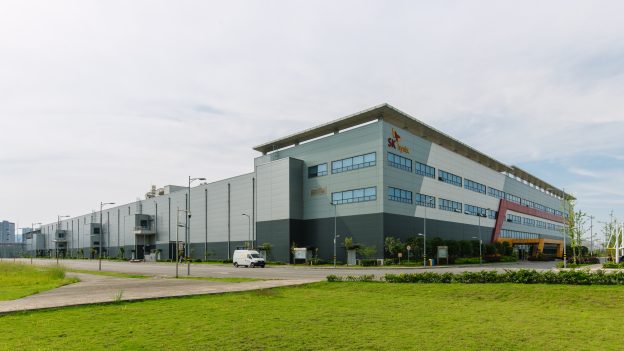
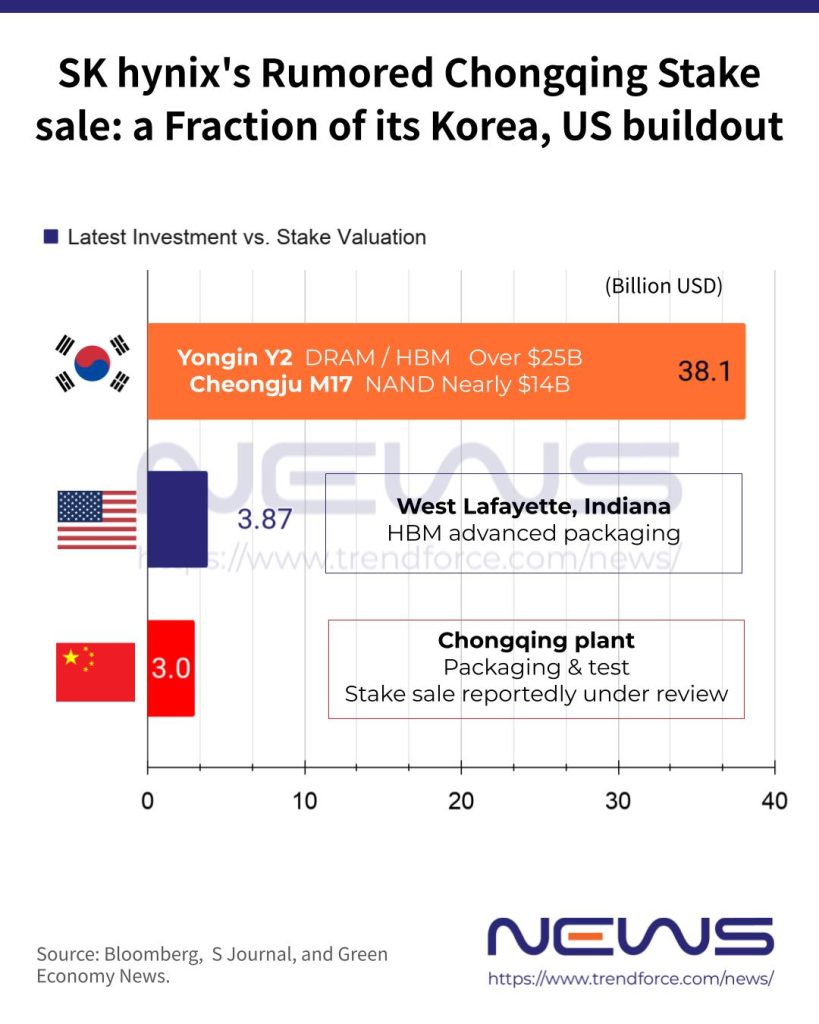
Coinciding with SK hynix’s KRW 54.3 trillion investment in the Yongin Y2 and Cheongju M17 fabs, Bloomberg reports that the memory giant is considering bringing in external investors or selling a stake in its Chongqing semiconductor packaging plant, valued at around KRW 4 trillion ($3 billion). The move has fueled speculation that SK hynix could be reshaping its China operations alongside its massive domestic investment.
SK hynix, however, has yet to confirm any deal. According to Newsis, the company said on Aug. 10, in response to a Korea Exchange inquiry, that it is “reviewing various measures to strengthen the competitiveness of its packaging business,” but “nothing has been finalized.”
As noted by S Journal, it would therefore be premature to view the move as a China exit. SK hynix continues to produce DRAM in Wuxi, while Dalian—acquired through Intel’s NAND and SSD business—remains a key NAND flash front-end hub. China is still expected to account for around 30–35% of SK hynix’s DRAM capacity and 35–40% of its NAND capacity in 2026, according to TrendForce.
Chongqing Plant: From $1B Investment to $3B Valuation
S Journal further explains that SK hynix’s Chongqing plant, which began mass production in July 2014, is a major back-end processing hub in China. As suggested by the report, the plant was built as SK hynix expanded its China production network to meet the growing global NAND flash market.
According to Chinese tech outlet TechPlus, cited by Sohu, SK hynix’s Chongqing facility employs around 3,000 people, with reported investment of more than $1 billion but less than $1.5 billion. At the roughly $3 billion valuation now under discussion, SK hynix could be looking at a sale price roughly two to three times its reported investment, underscoring the potentially substantial value uplift of the asset.
As reported by Bloomberg, Chinese investment funds and local semiconductor companies are among the potential buyers, while SK hynix is also weighing a partial stake sale that would allow it to retain a minority interest. However, Green Economy News notes that the talks are still at an early stage, with no deal or sale structure finalized.
SK hynix Weighs Reshaping Its China Packaging Footprint
More broadly, the potential move could reflect SK hynix’s efforts to reduce geopolitical exposure in China while shifting more of its AI memory supply chain toward Korea and the U.S., where customer access is stronger, Green Economy News reports. An industry source cited by the outlet said the company’s China strategy remains fluid, but the broader trend toward Korean front-end production and U.S.-based advanced packaging is likely to gain momentum.
As noted by Green Economy News, the shift is already visible in SK hynix’s packaging buildout across Korea and the U.S. The company is investing $3.87 billion (KRW 5.2 trillion) in West Lafayette, Indiana, to build an advanced packaging plant for AI memory, including HBM, with mass production targeted for 2H28. In Korea, it is also building the P&T7 advanced packaging plant at its Cheongju campus, slated to begin operations in 2028.
SK hynix Rewires Its Production Map
On Aug. 7, SK hynix’s board approved KRW 54.3 trillion in investment through 2031 for the Y2 fab at the Yongin semiconductor cluster and the M17 fab in Cheongju. The move underscores a broader shift: while reassessing the ownership structure of its existing Chinese back-end assets, SK hynix is committing more than KRW 50 trillion to next-generation capacity in Korea, as highlighted by S Journal.
More broadly, the strategy suggests SK hynix is rethinking where to own, where to invest, and what role each production site should play in its future technology roadmap, rather than simply maintaining full ownership of every facility, according to S Journal. As suggested by the report, in Korea, the company is expanding next-generation DRAM, HBM, and NAND capacity centered on Yongin and Cheongju, while strengthening the integration of front-end production and advanced packaging in Cheongju. Meanwhile, in the U.S., it is building advanced packaging and R&D capabilities for next-generation HBM.
Read more
- [News] U.S. Export Curbs Backfire? Samsung, SK hynix Reportedly Mull AMEC’s Tools as China Fab Backups
- [News] Memory Giants’ China Investments Soar in 2025: Samsung Xi’an Up 67%, SK hynix Wuxi, Dalian Hit Trillion-Won
(Photo credit: SK hynix)