[News] Tesla’s Terafab Takes Shape in Texas with $16.8B First Phase; Memory Engineering Hiring Signals DRAM Push
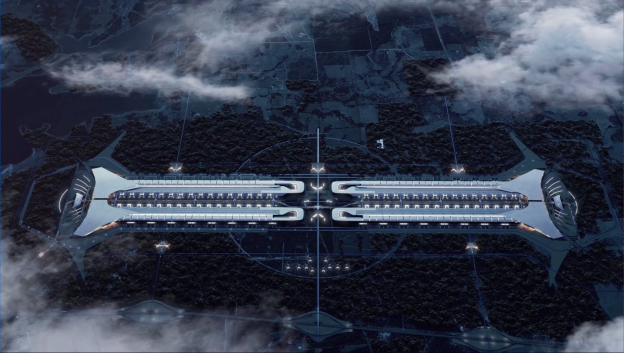
Elon Musk’s semiconductor ambitions are beginning to take shape as new details of the Terafab project emerge. According to Reuters and Houston Chronicle, the first phase will require an initial investment of $16.8 billion, well below the company’s earlier $55 billion estimate. However, a May regulatory filing cited by Reuters indicates total investment could climb to as much as $119 billion if future expansion phases proceed.
The advanced AI semiconductor complex is planned for Grimes County, Texas, and will span approximately 100 million square feet, with 3,000 new jobs created. As noted by Reuters, Terafab is designed as a fully integrated manufacturing hub, capable of producing, packaging, and testing advanced logic and memory chips under one roof. The facility will supply processors for Tesla’s Optimus humanoid robots and Cybercabs, while also providing high-performance chips to support SpaceX’s orbital data centers, the report adds.
Terafab Targets AI Memory Bottleneck with DRAM Talent Push
Notably, beyond chip production, Musk could also be moving to address one of the AI industry’s biggest constraints, memory supply, at Terafab. Tesla has begun recruiting for key positions at Terafab, including a Memory Process Integration Engineer role, according to Wccftech, citing a company job listing.
The position, according to Tesla, will focus on end-to-end DRAM process integration, advanced sub-20nm DRAM node development, memory cell optimization, and collaboration across manufacturing and circuit design teams. It will also support the development of emerging memory technologies, including MRAM, RRAM, and 3D DRAM.
Wccftech suggests that the hiring move signals that Terafab is expanding beyond AI logic chips and stepping into advanced memory manufacturing, a strategic push that could intensify competition in a market long dominated by Samsung, SK hynix, and Micron.
The development also aligns with Musk’s broader vision for Terafab as a fully integrated semiconductor powerhouse. Describing the project’s ambition, Musk said Terafab represents “the most epic chip-building effort” undertaken by the company— “combining logic, memory, and advanced packaging all under one roof.”
While Terafab represents Tesla’s long-term push toward greater semiconductor self-sufficiency, the company continues to rely on external suppliers for its near-term memory needs. During Tesla’s late July earnings call, Musk said Micron had been “making room for Tesla in the years to come,” with the U.S. memory maker reserving significant capacity for the automaker on what he described as reasonable terms despite currently “pretty insane” memory prices.
Meanwhile, Tesla’s near-term chip supply remains secured under existing agreements, as noted by QUARTZ. Yonhap News adds that Tesla will split AI5 production between Samsung and TSMC, while Samsung will reportedly take full responsibility for AI6 and TSMC will handle AI6.5.
Read more
(Photo credit: Elon Musk’s X)