[News] CXMT Reportedly Eyes Second Beijing 12-inch DRAM Fab; HP, Asus, and Acer Said to Begin Limited Use
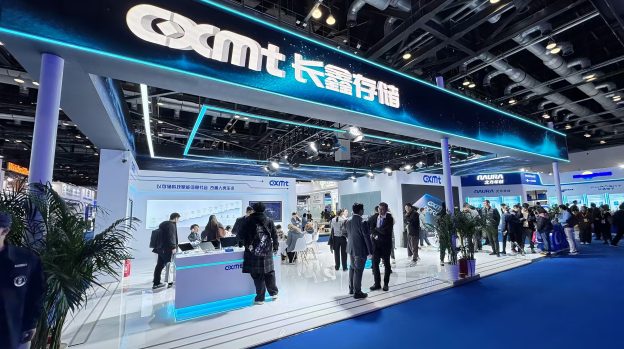
China’s DRAM maker CXMT is reportedly considering another major capacity expansion. According to Reuters, sources say CXMT is weighing plans to build a second 12-inch DRAM fab in Beijing and is seeking at least RMB 60 million (US$8.9 million) in funding from the governing body of the Beijing Economic-Technological Development Area, along with support from other state-owned technology companies. The report adds that the discussions remain at an early stage, and the size and structure of any funding package could still change.
CXMT currently operates three 12-inch DRAM fabs—two in Hefei and one in Beijing—with a combined capacity of about 300,000 wafers per month, according to Reuters. Another Reuters report notes that the company is building new fabs in Shanghai and Hefei while remaining in talks with local authorities on another facility. Together, these projects could lift capacity to over 600,000 wafers per month, more than doubling current levels. TechPowerUp also indicates that CXMT is expected to end 2026 with approximately 350,000 wafers per month (WPM) of DRAM output, just slightly behind Micron’s projected 375,000 WPM.
The proposed 12-inch fab would be built in Yizhuang, about 20 km (12 miles) southeast of central Beijing, where CXMT already operates a DRAM fab, as the Reuters report notes. The location is one of China’s key semiconductor manufacturing hubs. The Beijing Economic-Technological Development Area is home to major technology and semiconductor companies, including contract chipmaker SMIC, chip equipment maker Naura, and Xiaomi.
The discussions reportedly began before CXMT’s stock market debut, which provided fresh capital to support its expansion. While the proposed fab’s planned capacity and total investment have not been disclosed, Reuters notes that building a leading-edge DRAM fab typically costs more than US$10 billion.
CXMT DRAM Reportedly Reaches Global PCs Amid Supply Constraints
Meanwhile, Nikkei notes that leading PC makers including HP, Asus, and Acer have reportedly begun using limited volumes of CXMT’s DRAM in notebooks amid an unprecedented memory shortage driven by AI infrastructure demand. The report notes that many major PC makers completed qualification of CXMT’s DRAM around the middle of this year, paving the way for adoption.
Still, Nikkei notes that both shipment volumes and the number of notebook models using CXMT’s chips remain limited, as the company is reportedly prioritizing a significant portion of its production capacity for Chinese customers such as Huawei.
Notably, sources cited by Nikkei said CXMT’s DRAM is priced on par with leading suppliers such as Samsung rather than at a discount. Strong demand has also made supplies difficult to secure beyond the current quarter.
CXMT’s Market Position and Industry Impact
According to TrendForce, CXMT ranked fourth among DRAM suppliers by revenue in 1Q26 with a 7.6% market share. Samsung, SK hynix, and Micron remained the top three suppliers, collectively accounting for 89.7% of the global market.
TrendForce notes that CXMT is steadily transitioning to its latest G4 process node, significantly improving both product quality and manufacturing output. Although the company has secured design wins with a limited number of international customers, its shipments remain heavily concentrated in the Chinese domestic market. As China accelerates efforts to build a self-sufficient AI supply chain, CXMT has become an increasingly strategic supplier. Weak smartphone demand has also prompted the company to reduce the share of mobile DRAM in its product portfolio. TrendForce expects server DRAM to eventually become CXMT’s largest product segment.
Read more
- [News] CXMT’s 471% STAR Debut Makes It China’s Top Listed Firm, Reshaping Global Memory Dynamics
- [News] NAND Leaders Bet on Taiwan’s DRAM Maker: Why Kioxia, SanDisk, SK hynix Back Nanya Tech’s $2.5B Deal?
(Photo credit: CXMT)