[News] AI Data Center Demand Revives HDD; Japanese Component Makers TDK, Resonac Expand Capacity
Hard disk drives (HDDs) are regaining attention as AI data center operators seek cost-effective, high-capacity storage to support rapidly growing data volumes. According to The Elec, although HDDs gradually lost ground to solid-state drives (SSDs), they are now poised for a rebound. The report says Japanese HDD component makers, including TDK, JX Advanced Metals, Resonac, Nitto Denko, and HOYA, are expanding production capacity.
As the report indicates, the global HDD market is dominated by Western Digital, Seagate, and Toshiba, with Western Digital and Seagate each holding more than 40% market share, while Toshiba accounts for around 17%. The three companies are racing to commercialize HDDs with capacities exceeding 40TB for AI data centers.
Western Digital plans to begin mass production of its 40TB-class HDDs in the second half of 2026 and is targeting 100TB HAMR-based drives by 2029. Seagate is already shipping HAMR-based HDDs with capacities of up to 44TB and aims to enable 100TB drives by increasing per-platter capacity. Toshiba, meanwhile, is advancing MAMR technology with 30TB to 34TB HDDs and plans to introduce 40TB-class products in 2027.
As noted by a MoneyDJ report last month, citing Nikkei, strong demand from Chinese PC makers and AI data centers has tightened HDD supply and pushed contract prices higher. Nearline HDD prices reportedly rose about 10% quarter over quarter in April–June, while U.S. hyperscalers such as Google and Amazon, which account for roughly 60% of nearline HDD shipments, continue to struggle to secure sufficient supply.
According to TrendForce, the massive volumes of data generated by AI are placing increasing pressure on data center storage infrastructure. In the traditional tiered storage architecture, nearline HDDs have long dominated cold data storage due to their exceptionally low cost per gigabyte. Cold data typically includes backup files and historical records—datasets that are infrequently accessed but must be retained for long-term archiving. As inference AI applications rapidly expand, demand for cold data storage is also rising. By contrast, SSDs are valued for their superior read and write performance and are primarily used for hot and warm data that require frequent access.
Japanese Suppliers Expand HDD Component Capacity
As The Elec notes, growing demand for ultra-high-capacity HDDs is driving key component suppliers to expand production capacity and increase investment. HDDs rely on a wide range of components, including magnetic heads, magnetic recording media, glass substrates, sputtering targets, and flexible printed circuit boards (FPCs).
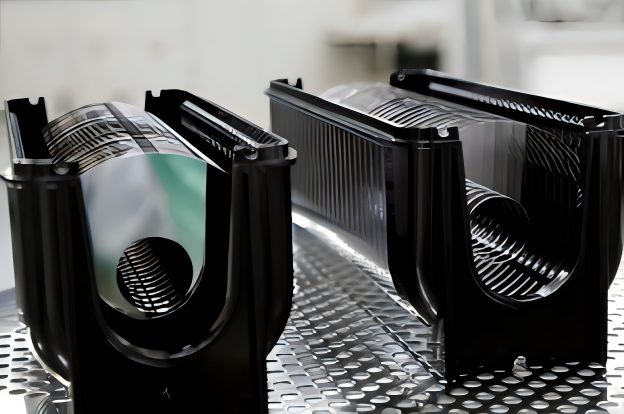
Among the notable developments, Resonac, the world’s largest supplier of HDD magnetic recording media, is expanding its Singapore production base to increase annual capacity by approximately 31%, from 160 million to 210 million platters, supporting higher-density heat-assisted magnetic recording (HAMR) and microwave-assisted magnetic recording (MAMR) HDDs.
HOYA is also expanding capacity, investing approximately JPY 50 billion to build a new HDD glass substrate plant in Vietnam, scheduled to begin operations in 2028. The report notes that HOYA is the world’s sole supplier of HDD glass substrates.
TDK, meanwhile, said in May that it would expand production capacity for HDD heads and suspensions to meet growing demand for AI nearline HDDs.
The Elec also highlights investment across other parts of the HDD supply chain. JX Advanced Metals is expanding capacity for sputtering targets used in HDD media manufacturing, while Nitto Denko plans to invest JPY 43 billion through 2028 to expand its CISFLEX flexible circuit board business for HDD suspensions.
Read more
- [News] WD’s 2026 Production Fully Booked; LTAs Reportedly Extend to 2028-29 with Supply Talks to 2030
- NAND Flash Supply Growth to Outpace Demand in 2027, Easing Supply Constraints in 2H27, Says TrendForce
(Photo credit: Resonac)