[News] Wistron Produces First U.S.-Made GB300 Baseboard; D1 Factory Represents Just 5% of NVIDIA’s Output
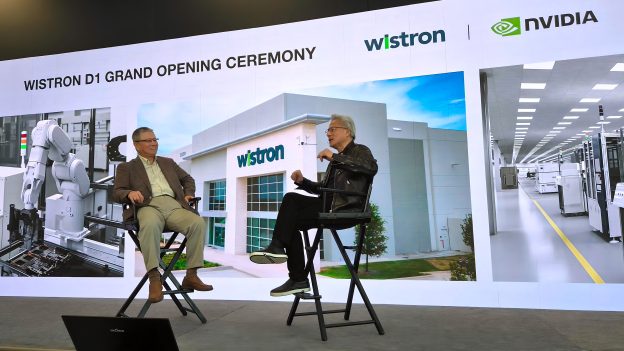
Wistron officially inaugurated its D1 AI Smart Factory in Fort Worth, Texas, on July 21 (U.S. Central Time). According to Commercial Times, the site is the first in the U.S. to manufacture and mass-produce NVIDIA GB300 Grace Blackwell Ultra Superchips. The nearly US$700 million factory spans approximately 324,000 square feet and serves as a key hub in Wistron’s global AI infrastructure manufacturing network.
Wistron Chairman Simon Lin said the new D1 factory has already begun producing NVIDIA GB300 Grace Blackwell Ultra Superchips and will manufacture NVIDIA Vera Rubin Superchips in the future. Wistron also plans to implement NVIDIA’s chip-module-to-system production strategy at the site, as noted by the report.
The facility uses NVIDIA’s accelerated computing platform, integrating open AI models including Nemotron and Cosmos with Omniverse and Metropolis technologies. It also leverages digital twins to optimize factory design, production processes, and operational efficiency, supporting the development of a next-generation AI smart factory, MoneyDJ notes.
The D1 factory entered mass production in July in line with its customer’s schedule. It currently handles L6-level assembly and testing of AI server systems, with its first production line now operating smoothly, according to the Central News Agency. Looking ahead, Lin said the upcoming D2 facility will have twice the production capacity of D1, further expanding Wistron’s AI server manufacturing footprint in the U.S.
AI Demand Continues to Accelerate
NVIDIA’s demand for AI servers is doubling each year, Jensen Huang said. As a result, the new D1 factory represents only about 5% of NVIDIA’s total manufacturing output, and additional facilities will be needed to keep pace with strong AI demand, Economic Daily News notes. Huang added that the AI market is expanding rapidly, while the supply of AI chips remains far from sufficient. Chip demand related to AI is growing by roughly 25% annually, and today’s AI data centers require at least 10 times as many chips as traditional data centers, the report adds.
Meanwhile, during an interview at the event, Huang dismissed concerns that Chinese AI startup Moonshot AI’s Kimi 3 model could fuel worries about excessive AI investment by delivering greater efficiency at a lower cost. “It’s exactly backwards,” he said, according to Central News Agency. Huang explained that Kimi 3 is a highly useful and intelligent AI model, and that smarter AI will attract more users, ultimately driving substantial demand for AI infrastructure and hardware.
Read more
- [News] AMD’s Helios AI Rack Challenges NVIDIA with HBM4 Memory Edge; Microsoft Joins as Latest Customer
- NVIDIA’s 800V Power Rack to Debut as an Optional Configuration for Vera Rubin, with Broader Adoption Expected in the Rubin Ultra Generation, Says TrendForce
(Photo credit: NVIDIA on X)