[News] TSMC Reportedly Cuts 28nm Output by Over 25% Since Early 2026 as Advanced Node Push Accelerates
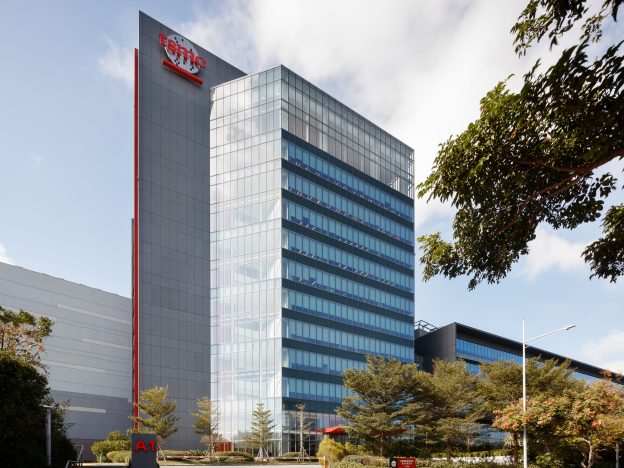
As TSMC ramps up 2nm and 3nm production, it is also accelerating the phaseout of legacy nodes. Commercial Times, citing supply chain sources, reports that monthly wafer starts at Fab 15A, TSMC’s primary 28nm site, have dropped by more than 25% since the start of the year.
The pullback in 28nm production also aligns with a broader transformation of Fab 15A. A May Economic Daily News report indicated that the facility, long focused on 28nm and 22nm production, is being converted into a 4nm manufacturing base, with older equipment phased out and new tools brought online. The report added that neighboring Fab 15B remains a key hub for 7nm production.
In general, sources cited by Commercial Times estimate TSMC’s monthly 28nm wafer starts have dropped from about 200,000 wafers earlier this year to 150,000 in June. Meanwhile, construction of Fab 25 in Taichung, the future home of the A14 node, is advancing quickly, with civil works at the P1 facility already completed, the report suggests.
Notably, analysts cited by Commercial Times say TSMC is pursuing a two-pronged strategy, tightening 28nm capacity and steering customers toward 12nm, while simultaneously ramping investment in 2nm, A14, SoIC (System-on-Integrated-Chips), and silicon photonics. The shift, as per the report, is expected to improve capital efficiency and lift average selling prices.
Spillover Demand Benefits UMC, Vanguard
On the other hand, Commercial Times reports that TSMC is reallocating more 28nm capacity to interposer production while scaling back lower-margin business, prompting some customers to turn to UMC and Vanguard to capture spillover demand.
Among them, UMC operates a broad 28nm platform and is advancing its 22nm node, enabling it to capture demand across OLED display drivers, Wi-Fi, networking, consumer, and automotive chips. The report suggests that if TSMC further shifts resources toward sub-12nm nodes, UMC could become the primary long-term alternative for 28nm customers.
Meanwhile, VIS remains largely focused on 8-inch production, but its new 12-inch fab in Singapore is accelerating construction and positioning itself to absorb potential spillover demand from TSMC, the Commercial Times report adds. According to a February Economic Daily News report, TSMC’s 8-inch capacity stands at roughly 5 million wafers per year, with about 80% expected to be gradually transferred to VIS over the next few years.
Read more
- [News] TSMC Reportedly Runs Dual-Track Evaluation on CoPoS Pilot Line, Sparking Global, Local Vendor Competition
- [News] UMC, VIS, PSMC Reportedly Eye Mature-Node Price Hikes Up to 10% From Apr.; IC Costs May Rise
(Photo credit: TSMC)