[News] China Memory Module Maker POWEV Advances DDR5 Push as 64GB RDIMM Reportedly Enters Volume Production
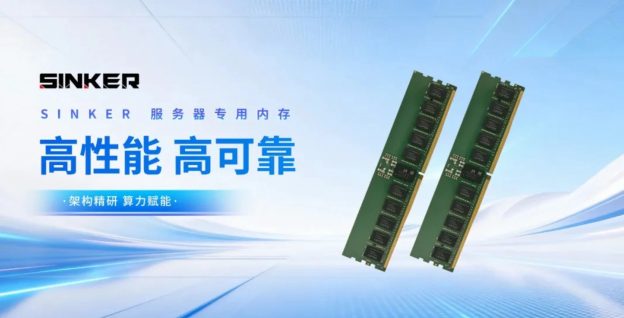
As the market focuses on China’s push into HBM and next-gen NAND, another domestic memory player is quietly advancing in DDR5 amid the AI-driven demand surge. According to IT Home and Security Times, module maker POWEV said its 64GB 5600MT/s DDR5 Registered DIMM (RDIMM) server module, launched earlier this year under its SINKER brand, has passed validation by multiple major customers and entered volume production and commercial shipment.
As noted by Wccftech, the company first signaled plans to enter DDR5 production in 2021. Five years on, that roadmap has materialized. According to POWEV’s official listing, the firm is now shipping DDR5 modules in two variants—one targeting the domestic Chinese market and the other aimed at overseas customers—offering up to 64GB capacities and speeds of up to 5600 MT/s.
According to Eastmoney.com, the company’s RDIMM server memory is designed for mission-critical workloads including enterprise data centers, AI training and inference, and cloud server deployments. At the hardware level the module adopts a 2Rank×8 (2R8) architecture optimized for high-density deployments, enabling terabyte-scale memory configurations in both single- and dual-socket servers, the report suggests.
Notably, it operates at 5600MT/s, delivering up to 44.8GB/s of bandwidth per module—roughly double DDR4 performance, as per Eastmoney.com.
IT Home adds that the memory module, built on original DRAM wafers packaged by POWEV, has also completed 24/7 full-load burn-in testing across a temperature range of 25°C to 85°C, along with power fault-tolerance validation simulating data center power fluctuations, allowing stable operation across a broad set of enterprise workloads.
Emerging Opportunity for Chinese Memory Makers
POWEV’s recent progress adds to a broader shift in global memory sourcing trends. As previously reported by Nikkei, leading PC makers including HP, Dell, Acer and ASUS are evaluating memory sourcing from Chinese suppliers for the first time, as a global supply crunch disrupts product launches and pushes up costs across the industry.
The report added that certain Chinese DRAM products are already widely deployed across the domestic ecosystem, spanning smartphone makers such as Huawei, Xiaomi, Oppo and Vivo, PC vendor Lenovo, as well as cloud providers including ByteDance and Alibaba Cloud. HP, in particular, has begun product qualification with a leading Chinese memory supplier as part of efforts to diversify its supply chain, as per Nikkei.
Read more
(Photo credit: POWEV)