[News] Intel, SoftBank Reportedly to Unveil ZAM-Based HB3DM in June, Bandwidth More Than Double HBM4
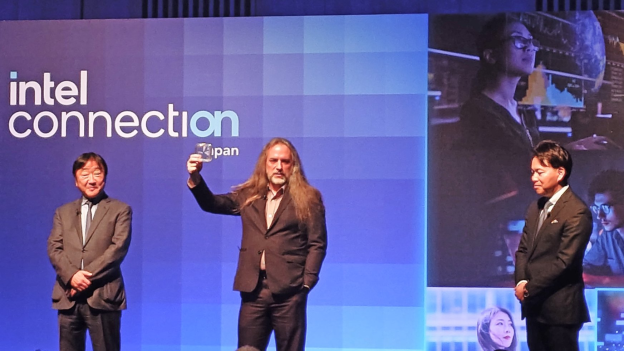
Intel is collaborating with SoftBank’s subsidiary SAIMEMORY to advance a potential alternative to conventional high-bandwidth memory (HBM). According to TechPowerUp, SAIMEMORY plans to present a paper at VLSI Symposium 2026 in June, detailing its newly developed HB3DM memory based on Z-Angle Memory (ZAM) technology.
HB3DM is positioning itself as a leader in bandwidth. According to the report, Intel is said to achieve around 0.25 Tb/s of memory bandwidth per mm², implying roughly 5.3 TB/s per 10 GB module based on a 171 mm² die. At these levels, the technology could outpace competing HBM4 solutions. HBM4 delivers around 2 TB/s per stack, which is less than half of what HB3DM is expected to achieve.
As the report notes, the first-generation HB3DM will adopt a nine-layer stack built using hybrid bonding for 3D integration. A base logic layer will manage data movement, topped by eight DRAM layers for storage. Each layer is expected to incorporate roughly 13,700 TSVs to support the hybrid bonding structure. Meanwhile, in terms of capacity, HB3DM is expected to deliver roughly 1.125 GB per layer, totaling about 10 GB per module. The report notes that this relatively modest capacity contrasts with HBM4, which can reach up to 48 GB per stack.
It remains unclear when SAIMEMORY plans to commercialize these memory chips or which supplier will produce the underlying DRAM. However, the report notes that Intel’s involvement could potentially signal a return to DRAM manufacturing within its own fabs, though this remains uncertain at this stage.
Intel–SoftBank Advance ZAM Memory with Public-Private Backing
Intel and SoftBank are working together through SAIMEMORY to advance new memory technologies. According to Nikkei XTECH, the two companies are developing “ZAM (Z-Angle Memory),” designed for AI training and inference workloads. The initiative targets a prototype by fiscal 2027, with commercialization planned for fiscal 2029.
ZAM is positioned as a next-generation alternative to HBM. As noted by TV Tokyo Biz, rather than stacking memory modules in a conventional horizontal layout, it adopts a vertical configuration and incorporates a proprietary wireless approach that eliminates direct bonding to the circuit board, helping improve heat dissipation. This design is said to cut power consumption by roughly 40% compared with traditional HBM.
Public–private backing and collaboration around SAIMEMORY are continuing to grow. In April 2026, Japan’s Ministry of Economy, Trade and Industry (METI) decided to provide up to JPY 3.8 billion to support the project’s early-stage development, according to TV Tokyo Biz. The report also notes that SoftBank, along with Fujitsu, the Development Bank of Japan, and RIKEN, are in talks to jointly invest around JPY 4 billion.
Read more
- [News] PSMC Joins Intel, SoftBank’s ZAM Initiative to Manufacture AI Memory, Eyeing an Alternative to HBM
- [News] First Look at ZAM: SAIMEMORY Unveils Memory to Address Thermal Issues at Intel’s Japan Event
(Photo credit: Intel)