[News] U.S. Reportedly Moves to Block Chip Tool Shipments to China No.2 Foundry Hua Hong as It Seeks 7nm After SMIC
The U.S. has reportedly halted shipments of semiconductor equipment to facilities operated by China’s second-largest foundry, Hua Hong. According to Reuters, citing sources, the U.S. Department of Commerce has sent letters to several companies, including Lam Research, Applied Materials, and KLA, notifying them of new restrictions on tools and materials bound for two Hua Hong plants. U.S. officials believe these facilities may be involved in producing China’s most advanced chips.
Hua Hong Group is reportedly developing advanced chip manufacturing technologies that could be applied to AI chip production, the report notes. The report adds that the Commerce Department’s letters are also intended to block equipment shipments to Hua Hong Group’s Huali.
Currently, SMIC remains the only domestic player capable of producing chips using 7nm. However, Huali reportedly began developing its 7nm process at the Hua Hong Fab 6 facility last year, with support from Huawei-backed SiCarrier. As the report highlights, the company is targeting initial output of several thousand 7nm wafers per month by the end of 2026.
Huawei Technologies has been working with Hua Hong and is said to be planning to shift part of its AI chip production from SMIC to Hua Hong, as the report indicates, citing sources.
The two Hua Hong sites targeted by the Commerce Department include Fab 6 in Shanghai, which according to Huali Microelectronics’ website supports 28 and 22nm processes, and a facility known as Fab 8a that does not appear on the company’s website. Sources say the latter is believed to still be under construction.
On the policy mechanism, the report notes that the Commerce Department’s notice, known as an “is-informed” letter, enables the U.S. to bypass lengthy rulemaking procedures and swiftly impose new licensing requirements on specific companies.
U.S. Curbs: Supplier Exposure and Industry Impact
In terms of impact, the report notes that U.S. chip equipment makers and other suppliers could face billions of dollars in lost sales, particularly if they were supplying fabs under construction or facilities being retooled for more advanced production.
Lam Research, Applied Materials, and KLA are among the world’s leading semiconductor equipment suppliers, providing key etching, deposition, and process-control tools. According to InvestingLive, all three have significant exposure to China, with Lam generating about 35% of its recent quarterly revenue from the market and Applied Materials roughly 30%.
The curbs could slow China’s push to expand domestic chip production, although Hua Hong may be able to replace the affected equipment with alternatives from overseas or Chinese suppliers, Reuters notes.
Earlier this month, U.S. lawmakers introduced the bipartisan MATCH Act, which would specifically name Hua Hong, SMIC, Huawei Technologies, and leading Chinese memory makers as restricted entities, while also pressing allies such as the Netherlands, home to ASML, to align with U.S. controls, as noted by InvestingLive.
Read more
- [News] China’s Chip Consolidation Heats Up: Hua Hong Acquires 97.5% of Huali, Following SMIC’s Earlier Move
- [News] China Reportedly Sees Record 2025 Chip Tool Imports from Singapore, Malaysia; U.S. Hit Lowest Since 2017
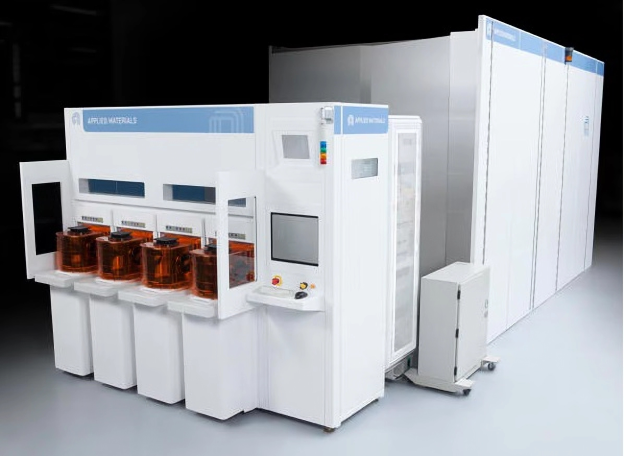
(Photo credit: Applied Materials)