[News] Micron Enters 3GB GDDR7 Race, With Production Underway but Still Trails in Speed
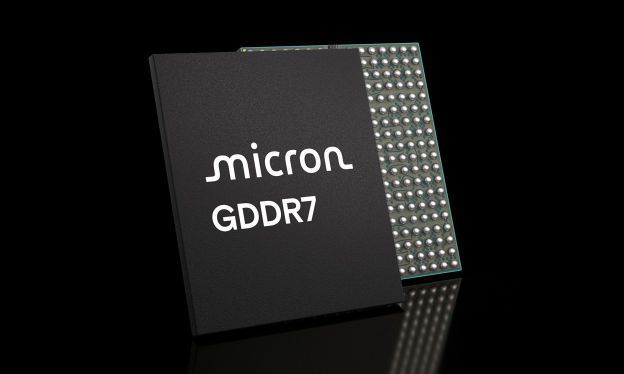
With Samsung and SK hynix already entrenched in the high-capacity GDDR7 race, Micron is now the latest heavyweight to enter the arena. According to listings spotted on Micron’s official website and cited by Wccftech, the company has begun rolling out 24Gb (3GB) GDDR7 modules, rated at both 28 GT/s and 32 GT/s.
As Wccftech notes, after scaling back its consumer-facing business to double down on data center opportunities, Micron is now pivoting decisively toward higher-density, higher-performance memory. According to the report, these GDDR7 modules are already making their way into the latest GeForce RTX 50 series GPUs, as well as workstation-class cards built on Blackwell.
As highlighted by the report, Micron’s lineup includes two 3GB variants—28 GT/s and 32 GT/s—with the former already in mass production, while the faster 32 GT/s version remains in the sampling phase.
With all three major memory vendors now rolling out 3GB GDDR7 chips, momentum in the segment is clearly accelerating. According to Wccftech, this sets the stage for potential adoption by NVIDIA in its next GPU refresh cycle—whether through the long-rumored GeForce RTX 50 Super series or updated SKUs within the existing GeForce RTX 50 series portfolio.
It is worth noting that market chatter cited in the report also suggests NVIDIA is already exploring configurations beyond the standard 3GB building block, including a potential GeForce RTX 5050 with 9GB of GDDR7 using three 3GB modules.
Speed Gap Remains
However, as previously reported by Tom’s Hardware, while Micron, in a February blog post, confirmed that its new 3GB GDDR7 ICs can reach speeds of up to 36 Gbps, this still lags behind its South Korean rivals.
According to Tom’s Hardware, Samsung’s latest solutions push as high as 42.5 Gbps, while SK hynix’s current lineup scales to 40 Gbps, with next-generation parts already in development targeting speeds of up to 48 Gbps.
However, the report also notes that the current landscape still plays to Micron’s advantage, as none of the existing NVIDIA GPUs are actually tapping into GDDR7 speeds anywhere near the 40 Gbps+ range. Even at the high end, the GeForce RTX 5080 runs its memory at around 30 Gbps, while flagship-tier parts like the GeForce RTX 5090 operate at a more conservative 28 Gbps, the report adds.
Read more
- [News] AI Reportedly to Consume 20% of Global DRAM Wafer Capacity in 2026, HBM and GDDR7 Lead Demand
(Photo credit: Micron)