[News] China Memory Firms Ride AI Upcycle: Biwin 2025 Net Profit Surges 429% YoY; GigaDevice Leads HK Listings
Driven by AI demand, memory chips have entered a new price upcycle since the second half of 2025. What developments among China’s A-share memory-related companies are worth watching? According to Cailian Press, recent 2025 annual reports by major companies reflect varied performance across the value chain. At the same time, China’s memory players are accelerating capital moves, including Hong Kong listings and capacity expansion, to capture the current “supercycle” opportunity.
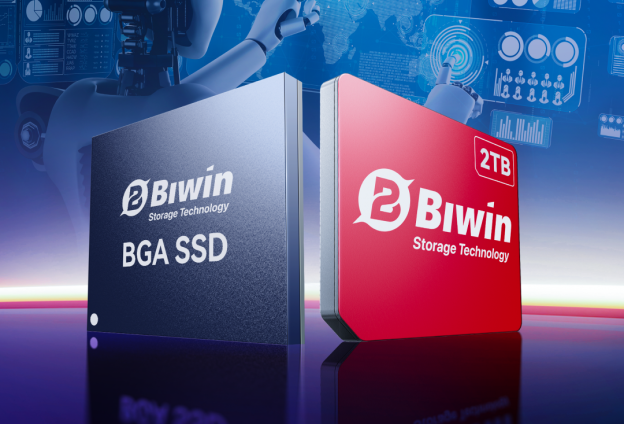
Among companies across the value chain, Biwin, a memory module maker, recorded the fastest growth in net profit attributable to shareholders, as noted by the report. In 2025, net profit reached RMB 853 million, surging 429.07% year over year. The company said its ePOP solutions—integrating eMMC and mobile LPDDR in a single package—have entered the supply chains of AI edge devices such as smart glasses and smartwatches for customers including Meta, Google, Alibaba, Xiaomi, Rokid, and RayNeo.
The company has been actively betting on the AI-driven memory supercycle. According to Investor China on Sina, Biwin announced in March that it had signed a long-term procurement agreement with overseas suppliers worth $1.5 billion (approximately RMB 10.367 billion), securing memory wafer supply for the next 24 months. The transaction value is close to the company’s full-year revenue for 2025.
GigaDevice Growth Highlights Trends in Memory Design Segment
As for the design segment of the value chain, Cailian Press indicates that GigaDevice reported 2025 revenue of RMB 9.203 billion, up 25.12% year over year and surpassing RMB 9 billion for the first time, while net profit attributable to shareholders rose 49.47% to RMB 1.648 billion. By segment, the report notes that memory chip revenue reached RMB 6.566 billion, up 26.41% year over year, serving as the company’s main growth driver, with gross margin at 42.84%, up 2.57 percentage points.
As highlighted in the report, GigaDevice stated in its annual report that leading manufacturers are accelerating their transition to advanced nodes such as HBM and DDR5, while gradually exiting niche markets and reducing 2D NAND capacity, creating a clear supply gap in related segments. As a result, the company’s niche DRAM and SLC NAND Flash products saw both volume and price increases in the second half of 2025.
On the other hand, Puya Semiconductor is the only company among those that have released annual reports to post a year-over-year decline in net profit attributable to shareholders, Cailian Press adds.
Memory Players Step Up Capital Strategies, Led by Hong Kong Listings
Beyond earnings, several companies are moving to capture the benefits of the current “supercycle,” advancing Hong Kong listings, industry M&A, and next-generation memory product development. On the listing front, as highlighted by Cailian Press, GigaDevice, Biwin, and Ingenic Semiconductor all outlined progress on H-share listings in their 2025 annual reports.
Among them, GigaDevice has made the fastest progress, with its H shares listed on the main board of the Hong Kong Stock Exchange on January 13, 2026, completing its “A+H” dual capital platform. Biwin has submitted its listing application, while Ingenic remains at an earlier stage, with its board having approved a proposal to issue H shares and pursue a main board listing in Hong Kong.
Read more
- [News] China’s DDR5 Price Drop Driven by Secondary-Market Modules; Impact Confined to Niche Channel
- [News] DDR5 Retail Prices Pullback Amid Market Correction, but Industry Players Cite Stable Contract Trends
(Photo credit: Biwin)