[News] SK hynix & Sandisk Kick Off Global Standardization of HBF, Market Set to Surge by 2030
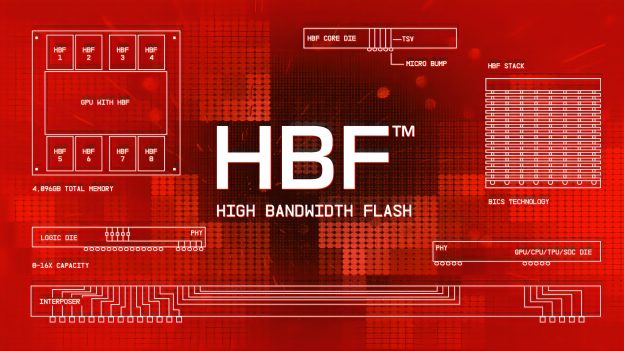
As the AI industry shifts from model training toward inference — existing memory architectures are increasingly reaching their limits, positioning HBF (High Bandwidth Flash) as a key next-generation solution. Marking a major step forward, SK hynix and Sandisk jointly hosted the “HBF Spec. Standardization Consortium Kick-Off” on Feb. 25, unveiling a global standardization roadmap for HBF aimed at the AI inference era, according to SK hynix.
SK hynix explained in its press release that HBF technology is expected to enhance AI system scalability while helping reduce total cost of ownership (TCO). Industry projections suggest demand for advanced memory solutions — including HBF — is likely to accelerate around 2030, the company stated.
SK hynix described HBF as a new memory tier positioned between ultra-fast HBM and high-capacity SSD storage, designed to bridge the gap between HBM’s performance and SSDs’ scalability while delivering the capacity expansion and power efficiency required for AI inference workloads. While HBM provides the highest bandwidth for intensive computing tasks, HBF functions as a complementary layer within the system architecture, the company said.
Against this backdrop, the two memory giants are actively advancing the standardization and commercialization of HBF solutions, leveraging their combined expertise in HBM and NAND design, packaging, and high-volume manufacturing.
SK hynix stated that, by advancing HBF as an industry-wide standard in collaboration with Sandisk, the two companies aim to establish a foundation that enables broader growth across the AI ecosystem. To accelerate this effort, a dedicated workstream under OCP (Open Compute Project) will be launched jointly with Sandisk to formally begin the standardization process, according to the press release.
Providing further clarity on the timeline, Sandisk previously stated that it aims to deliver the first HBF memory samples in the second half of 2026, with initial AI inference devices incorporating HBF expected to enter the sampling stage in early 2027.
For more performance details, industry sources cited by Sisa Journal estimated HBF can deliver over 1,638 GB/s, a dramatic leap compared with standard NVMe PCIe 4.0 SSDs, which top out around 7,000 MB/s. On the capacity side, HBF offers 512 GB per module, dwarfing HBM4’s 64 GB, positioning it as a potential cornerstone for future AI inference systems, the report added.
Read more
- [News] SK hynix Unveils AI Chip Architecture with HBF, Reportedly Boosts Performance per Watt by Up to 2.69×
- [News] Expert Says HBF May Be Deployed in NVIDIA GPUs by 2027–28; Market Could Surpass HBM by 2038
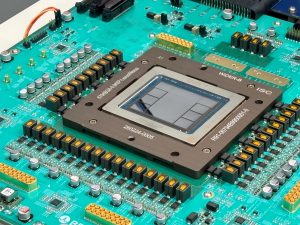
(Photo credit: Sandisk)
Please note that this article cites information from SK hynix, Sandisk and Sisa Journal.