[News] After Foldables, Are 7-Inch Phones Coming Back? Huawei, vivo Reportedly Eye Bigger Displays
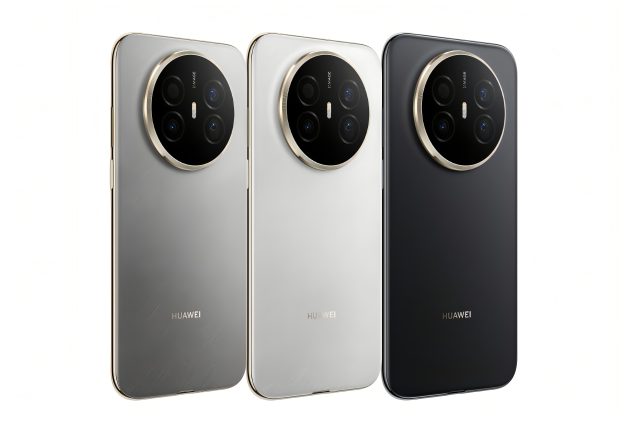
Could 7-inch large-screen smartphones make a comeback? According to Leikeji, sources say two handset makers are currently testing 7-inch large-screen phones. Although it remains unclear whether these devices will ultimately be launched, the move appears to tap into a segment of latent consumer demand. However, in a market already filled with small tablets and foldable phones, do we really need a 7-inch giant-screen smartphone?
As the report notes, 7-inch smartphones are not entirely absent from today’s market. Huawei launched the Mate 70 Air last year, a genuine large-screen device measuring 6.96 inches. Its body width reaches a striking 81.5mm. By comparison, the Xiaomi 17 Ultra measures just 77.6mm in width.
The report indicates that a larger display affects how the phone feels in hand, but two factors are driving renewed interest. First, a 7-inch device offers more internal space. Even the extra 0.3 inches can help manufacturers fit bigger batteries, stronger camera systems, and improved cooling. Second, as the report adds, moving from 6.7 inches to 7 inches brings a noticeable improvement in reading comfort and video immersion.
The Return of the 7-Inch Phone? Market Context and Revival Logic
Foldable phones are continuing to penetrate the market, but they have not addressed all large-screen demands. Meanwhile, the report indicates that mainstream flagship models are becoming increasingly similar in size, with differentiation narrowing. As a result, 7-inch smartphones can be seen as an attempt by manufacturers to avoid product homogenization.
So why did large-screen bar phones fade away in the first place? As the report highlights, the deeper reason is that the scarcity of big displays disappeared. In earlier years, when screen and bezel technologies were less advanced, 5.5 inches was already considered “giant.” But after full-screen designs became mainstream, 6.7 inches became the norm, and large displays shifted from a selling point to a standard feature.
As for their renewed appeal, the report notes that foldables only provide a large display after being unfolded, whereas a 7-inch phone offers a bigger screen by default, without requiring an extra step.
Portability Challenges and Potential Upcoming 7-Inch Models
Still, the report points out that the essence of a smartphone is its portability. If a large-screen device begins to feel like a “small tablet,” it sacrifices that advantage. The first challenge for oversized phones, therefore, lies in weight distribution, balance and center-of-gravity design, as well as whether the operating system and interface can fully leverage the benefits of a larger display.
As for which manufacturers may introduce 7-inch large-screen phones this year, the report notes that Huawei has already launched the 7-inch Mate 70 Air and is likely to release an updated version this year. Meanwhile, vivo has confirmed plans for a model called the vivo X300 Max, with “Max” widely expected to signal a larger display. In addition, the HONOR 500 series is set to introduce an Ultra variant that is also expected to move toward a bigger screen size, according to the report.
Read more
- [News] Apple Reportedly Plans Clamshell-Style iPhone After First Foldable, Taking Aim at Galaxy Z Flip
- [News] Huawei Mate 80 Reportedly to Feature Kirin 9030 with 20% Boost, Rumored to Stay on 7nm
(Photo credit: Huawei)
Please note that this article cites information from Leikeji.