[News] Chinese Memory Makers Push Ahead With IPO Plans: GigaDevice, UniIC, and DapuStor
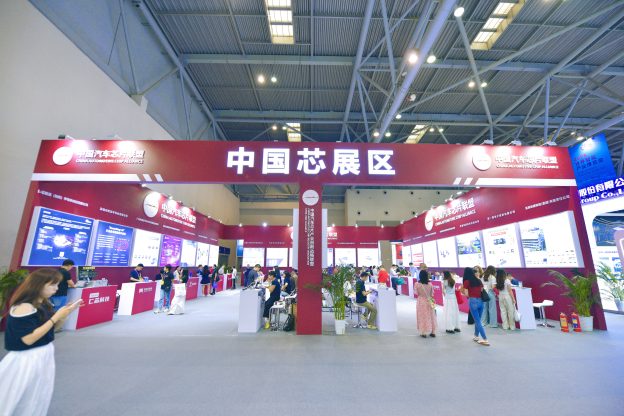
China’s memory chip sector has recently seen a wave of capital market activity. GigaDevice has officially listed in Hong Kong, completing its “A+H” dual-listing structure. Meanwhile, companies such as UniIC, XTX Tech, Hosinglobal and DapuStor are accelerating their IPO efforts across venues including the Beijing Stock Exchange, ChiNext (A-share market) and the Hong Kong Stock Exchange.
GigaDevice Lists on the Hong Kong Stock Exchange
On January 13, 2026, domestic memory chip maker GigaDevice officially debuted on the Hong Kong Stock Exchange, achieving an “A+H” dual-capital-market presence. According to the allotment results, GigaDevice offered a total of 28.9158 million shares globally, raising gross proceeds of approximately HKD 4.684 billion, with net proceeds of about HKD 4.611 billion.
As part of the use of these proceeds, strategic investments and M&A will focus on analog chips, SoCs and other IC design companies aligned with industry trends, particularly in AI edge computing and automotive applications.
Founded in 2005, GigaDevice is a diversified IC design company offering a broad portfolio of products, including Flash memory, specialty DRAM, microcontrollers (MCUs), analog chips and sensor chips. Its products serve applications across consumer electronics, automotive, industrial systems, PCs and servers, the Internet of Things and networking and communications.
UniIC Enters IPO Tutoring Phase on the Beijing Stock Exchange
On January 5, 2026, Xi’an UniIC officially launched preparations for an A-share listing and entered the IPO tutoring phase.
UniIC traces its origins to the memory business unit of Infineon’s Xi’an R&D Center established in 2004. In 2006, the unit was spun off as Qimonda Technology (Xi’an) and in 2009 it was acquired by Inspur Group and renamed Xi’an Huaxin Semiconductor.
In 2015, Tsinghua Unigroup subsidiary Guoxin Micro acquired Xi’an Huaxin Semiconductor and renamed it Xi’an UniIC. Following a restructuring in December 2019, Xi’an UniIC was merged into Beijing Unis Data Storage. In 2022, the control of Tsinghua Unigroup was transferred to Zhiguangxin Holdings.
Currently, UniIC has a registered capital of CNY 136 million and operates under the Tsinghua Unigroup. The company is a memory-technology-centric product and service provider, with core businesses spanning memory die products, KGD products, modules and system products, customized high-bandwidth DRAM products, and CXL controller chips, as well as IC design and development services. Its products are widely used in computers, servers, mobile communications, consumer electronics and industrial control applications.
XTX Tech and Hosinglobal Seek Hong Kong Listings
On January 9, 2026, XTX Tech formally submitted its listing application to the Hong Kong Stock Exchange, with GF Securities and CITIC Securities acting as joint sponsors.
XTX Tech focuses on the R&D, design and sales of general-purpose chips. Its core products are code-storage memory chips, supplemented by product lines covering analog chips and MCUs. Its code-storage memory portfolio includes NOR Flash, SLC NAND Flash and MCP products, which are widely used in networking and communications, AI communications, consumer electronics, smart home devices, IoT, industrial and medical equipment, automotive electronics, as well as computers and peripherals.
On January 1, 2026, Shenzhen Hosinglobal submitted its listing application to the main board of the Hong Kong Stock Exchange, with CICC International serving as its sole sponsor.
Founded in 2018, Hosinglobal specializes in the R&D, manufacturing, testing and sales of memory chip products. Its core offerings fall into four categories: embedded storage, solid-state drives, memory products and mobile storage. These products are widely applied across consumer electronics, automotive electronics, servers and artificial intelligence, among other high-end application fields.
Hosinglobal has successfully entered the supply chains of leading consumer electronics brands such as Xiaomi, Transsion, OPPO, vivo, TCL and Xiaodu. In recent years, the company has also expanded aggressively into the automotive electronics market and has been incorporated into the supply chains of Tier 1 automotive suppliers. It expects to achieve mass production of enterprise-grade storage products for enterprise application scenarios in 2026.
DapuStor Advances Toward ChiNext IPO Registration
According to information disclosed on the Shenzhen Stock Exchange website, Shenzhen DapuStor updated the status of its ChiNext IPO application to “registration submitted” on December 29, 2025.
Founded in 2016, DapuStor focuses on the R&D and sales of data-center-grade enterprise SSD products. It is among the few domestic semiconductor storage providers with full-stack in-house capabilities covering SSD controller chips, firmware algorithms and modules, and has already achieved volume shipments.
According to company disclosures, DapuStor concentrates on enterprise SSDs for data centers, with enterprise SSD sales accounting for more than 99% of its main business revenue during the reporting period. Its product generations span PCIe 3.0 through PCIe 5.0. During the reporting period, the company’s cumulative enterprise SSD shipments exceeded 4,900 PB, with over 75% featuring self-developed controller chips.
The IPO prospectus (registration draft) shows that DapuStor plans to raise CNY 1.878 billion, which will be invested in next-generation controller chip and enterprise SSD R&D and industrialization projects (approximately CNY 958 million), an enterprise SSD module mass-production testing base (approximately CNY 220 million), and working capital replenishment (CNY 700 million).
In the registration draft, DapuStor disclosed that its valuation reached CNY 6.81 billion following its most recent capital increase in December 2024. Taking into account valuations of comparable listed companies, the company expects a post-listing market capitalization of no less than CNY 5 billion.
(Photo credit: UniIC)