[News] Google Led TPU Innovation with Patent Spike; Broadcom, MediaTek Reportedly Boost Reserved Wafers

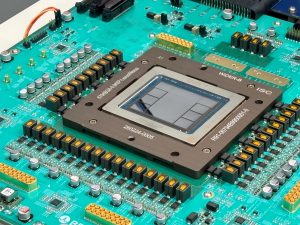
As Google intensifies its push for Tensor Processing Units (TPUs), aiming to secure more orders from major tech players, the company’s R&D efforts are clearly bearing fruit. Nikkei reports that the company has sharply increased patent filings for AI data-center semiconductors, with applications related to its in-house TPU rising 2.7-fold between 2018 and 2023.
The report highlights that this surge reflects a wider trend among hyperscalers to develop proprietary AI chips, hinting at a potential challenge to NVIDIA’s long-standing dominance. TrendForce estimates that Google’s TPU shipments will remain the largest among cloud service providers, with annual growth exceeding 40% in 2026.
Nikkei, using patent analytics tools from Kyoto-based Patentfield, examined global filings across Japan, the U.S., Europe, and China for keywords like “TPU,” “CPU,” and “GPU,” revealing a clear upward trend. According to Nikkei, Google’s TPU-related patent filings peaked in 2023, reaching nearly 400, while Amazon, Apple, and Microsoft each remained below 100 between 2020 and 2023.
Notably, interest in Google’s TPUs is growing among major tech players. Reuters reported in November that Meta is in discussions with the search giant to invest billions in its chips for deployment in data centers starting in 2027. Sources also indicated that Meta could begin renting Google Cloud chips as early as next year.
Broadcom, MediaTek as Key Beneficiaries
Amid robust demand for Google’s TPUs, supply chain sources cited by Commercial Times reveal that Broadcom and MediaTek are ramping up their reserved wafer capacity. The report notes that MediaTek has internally reallocated resources, shifting some personnel from its mobile chipset division toward ASIC and automotive segments, aiming to capture data center and CSP-customized chip opportunities.
According to the report, Google’s TPU will enter its eighth generation in 2026, with mass production set to begin in Q3 on TSMC’s 3nm node. Production volume is expected to reach 5 million units in 2027 and rise further to 7 million in 2028, the report suggests, adding both Broadcom and MediaTek, as ASIC partners, are actively preparing capacity to meet the demand.
Notably, Commercial Times reports that MediaTek’s second project is slated to begin contributing revenue in 2028. Supply chain sources suggest the client could be Meta, which is expected to leverage TSMC’s 2nm process, highlighting MediaTek’s ability to compete with top global players.
Read more
(Photo credit: Google’s X)
Please note that this article cites information from the Nikkei, Reuters and Commercial Times.