[News] SLC-Based AI SSDs Gain Traction as SK hynix and Kioxia Accelerate Development With NVIDIA
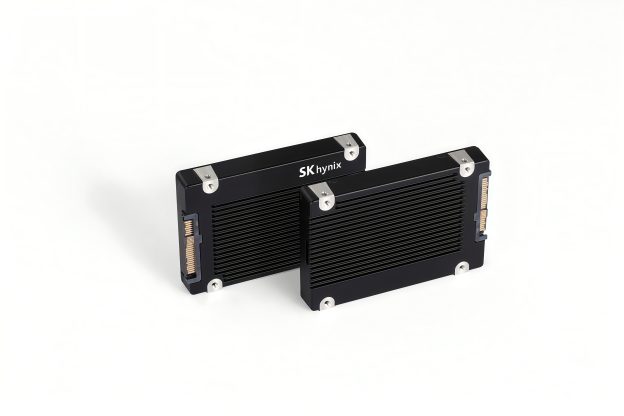
AI is reshaping the data center SSD market, with SLC-based AI SSDs gaining traction as a next-generation storage solution. According to ZDNet, data center SSDs have traditionally prioritized higher storage capacity, but major memory companies are now shifting toward SLC (single-level cell)–based designs to maximize data-processing performance.
The data center SSD market has traditionally been dominated by TLC and QLC technologies, as storing more bits per cell enables much higher data density per unit area. The report notes that demand continues to climb in AI data centers, where massive volumes of data must be processed, leading to increasing interest in SLC. However, it also notes that while SLC offers faster performance and greater reliability, it has long been viewed as impractical for large-scale data center deployments due to its limited capacity and higher costs.
SK hynix and Kioxia Accelerate SLC-Based AI SSD Development
As the report notes, SK hynix is developing its “AIN Family” lineup for the AI data center market, targeting three core dimensions: AI-N P (performance), AI-N B (bandwidth), and AI-N D (density). The company says AI-N P is being built on SLC NAND and is designed to efficiently handle massive data input and output in large-scale AI inference environments.
Notably, the report says the first-generation product delivers up to 25 million IOPS (input/output operations per second), roughly eight to ten times higher than current high-performance SSDs, which typically peak at around 3 million IOPS. The report adds that a second-generation version, targeted for readiness for mass production by the end of 2027, is expected to reach as high as 100 million IOPS.
NVIDIA Partnerships Drive Next-Gen AI SSD Development
To achieve these performance targets, SK hynix is redesigning both the NAND and the controller using a new architecture. As the report highlights, the company is also working closely with its key customer, NVIDIA, and plans to unveil the first samples by the end of 2026. Alongside SK hynix’s efforts, the report notes that Japan’s Kioxia plans to commercialize next-generation SSDs delivering 100 million IOPS in cooperation with NVIDIA by 2027, and the products are likewise expected to be based on SLC NAND.
NVIDIA has identified SLC NAND as a key enabler of next-generation AI storage, according to the report. The company is developing a software platform called SCADA (SCaled Accelerated Data Access) to support SLC NAND deployment. As the report notes, by bypassing conventional architectures—where data is first read from SSDs by the CPU before being passed to the GPU—SCADA shortens the data path and improves both training and inference speed and efficiency. The report adds that delivering NVIDIA’s SCADA solution requires a substantial leap in SSD performance, spurring major memory suppliers to race toward next-generation SSDs capable of exceeding 100 million IOPS.
HBF Emerges as SLC-Based AI Storage Technology
In addition, HBF (High Bandwidth Flash) is also being developed using SLC NAND. By stacking NAND dies, HBF significantly expands data-transmission bandwidth. SK hynix is currently working with SanDisk on standardization efforts, with a proof-of-concept (PoC) sample expected in 2027, followed by full-scale evaluation, the report adds.
Read more
- [News] SK hynix Reportedly Aims 100 Million IOPS with AI-NAND by 2027 in Collaboration with NVIDIA
- [News] SK hynix Reportedly Explores High-Bandwidth Storage Stacking NAND and DRAM
(Photo credit: SK hynix)
Please note that this article cites information from ZDNet.