[Insights] Cambricon Remains China’s Top AI Chip Startup; Rumored 2026 Triple Output Faces SMIC Limits
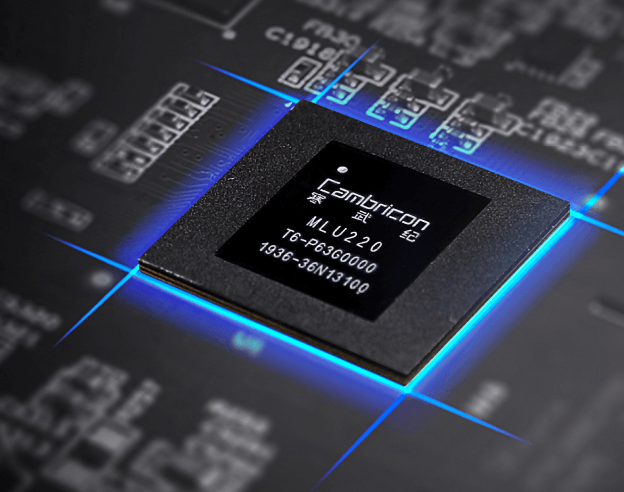
Just ahead of President Trump’s approval of NVIDIA’s H200 exports to China, Bloomberg reported that rising AI chip contender Cambricon Technologies is aiming to more than triple its AI chip output in 2026 as competition with Huawei intensifies.
TrendForce cautions, however, that intense competition for SMIC’s N+2 process capacity could sharply limit Cambricon’s ability to carry out such an ambitious production ramp. Still, consistent shipments of the Siyuan series continue to cement its position as China’s top AI chip startup. The following provides TrendForce’s in-depth analysis of Cambricon’s current product roadmap and the broader AI chip market landscape.
Cambricon Solidifies Lead as China’s Top AI Chip Startup
Cambricon’s accelerator portfolio centers on the Siyuan series, including the Siyuan 290 launched in 2021. According to TrendForce, the chip, fabricated on TSMC’s 7nm node, adopts the OAM (Open Accelerator Module) form factor and integrates 32GB of HBM2 memory. Leveraging its in-house MLU-Link interconnect technology for chip-to-chip connectivity, the Siyuan 290 reportedly serves as a cornerstone product for building single-node AI computing systems.
Currently, its most advanced AI chip is the Siyuan 590, an upgraded iteration of the Siyuan 290. Bloomberg sources further indicate that the Beijing-based company aims to ship roughly 500K AI accelerators in 2026, including as many as 300K units of its flagship Siyuan 590 and the next-gen Siyuan 690.
Notably, the Siyuan 590 is estimated to be manufactured using SMIC’s N+2 process and is reported to have entered volume production in the third quarter of 2024. As the underlying process has not seen a major node-level upgrade, TrendForce highlights that performance gains for the Siyuan 590—driven by the adoption of more advanced HBM and the integration of additional compute units—are estimated at around 15–20% over the Siyuan 290.
Meanwhile, Cambricon’s next-generation Siyuan 690 is still in the testing phase, with large-scale mass production potentially slipping to the second half of 2026.
Even as its next-generation AI chips may take time to scale, Cambricon posted RMB 4.6 billion in revenue in the first three quarters of 2025—several times, and in some cases nearly ten times, that of other Chinese AI chip startups—highlighting its clear lead in the sector, TrendForce notes.
SMIC Capacity Crunch
However, the company’s growth momentum may have to face an unexpected challenge: SMIC’s limited advanced node capacity. At present, the most advanced domestic process node in China that also offers the highest stability and yield is still SMIC’s N+2. While N+3 and N+4 processes are occasionally mentioned, their heavy reliance on multiple patterning steps is estimated to keep yields hovering at around 20%, TrendForce observes.
Thus, N+2—offering the most cost-effective path for volume production—has become the go-to node for many Chinese AI chip designers, including Cambricon, Biren Technology, Moore Threads, MetaX, Alibaba’s T-Head, Baidu’s Kunlunxin, and Huawei HiSilicon, all of whom rely on it to mass-produce their high-end products.
Nonetheless, SMIC has limited room to expand output materially, given restrictions on importing critical equipment and spare parts. Moreover, the ongoing transition toward domestically sourced tools and components is also weighing on production-line stability.
In short, until SMIC achieves a meaningful breakthrough in both capacity and yields, Cambricon will find it difficult to execute a large-scale ramp-up in chip production, TrendForce notes.
Read more
- [News] China’s GPU Trio Rise as NVIDIA Retreats — Decoding Moore Threads, MetaX, and Cambricon
- [News] Is Cambricon the Next NVIDIA or Unsustainable Growth Story? Three Key Risks Behind the Epic Rally
(Photo credit: Cambricon)
Please note that this article cites information from Bloomberg.