[News] Google’s First Arm-Based CPU Axion Reportedly Built on TSMC 3nm with GUC Design Support
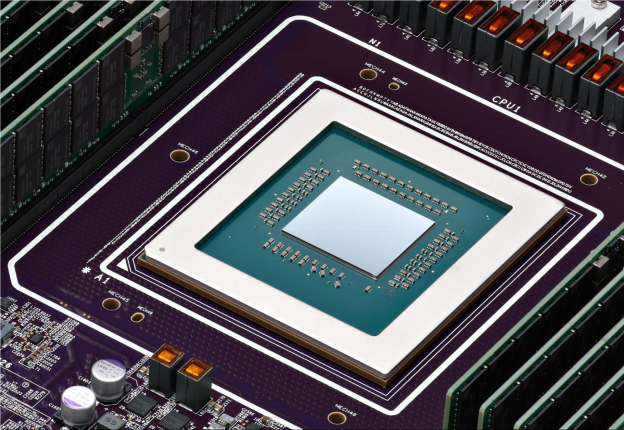
As global cloud providers ramp up in-house AI ASICs, Google is also doubling down. Alongside advancing TPU v7p (Ironwood), the company is betting on Axion—its first Arm-based CPU—reportedly built on TSMC’s 3nm node with design support from the foundry’s affiliate Global Unichip, according to Commercial Times.
TSMC Chairman C.C. Wei has hinted at strong AI-driven demand at last week’s earnings call, and Commercial Times notes that beyond NVIDIA servers, Google Cloud projects are set to drive the foundry giant’s largest data center growth. Global Unichip, assisting in the design of the Axion CPU, is expected to see a significant boost to its operations next year as well, the report adds.
As Arm previously explained, built on the Neoverse V2 platform, Axion processors are engineered specifically to deliver extraordinary performance and energy efficiency for a wide range of workloads. According to Arm, companies across industries, from content streaming to enterprise-scale data services, are using Arm-based Google Axion processors. Spotify, for example, has observed roughly 250% better performance using Axion-based C4A VMs.
According to TrendForce, North America’s top four CSPs are ramping up investments in AI ASICs to boost autonomy and control costs for large-scale AI and LLM workloads. Google is partnering with Broadcom on the TPU v7p (Ironwood)—an optimized training platform slated to expand in 2026 as the successor to the TPU v6e (Trilium). Commercial Times reports that the chip will also be manufactured using TSMC’s 3nm process.
TrendForce predicts Google’s TPU shipments will stay the highest among CSPs, with over 40% annual growth in 2026.
As reported by The Information, Google primarily uses TPUs for its own AI projects, such as the Gemini models, with internal demand soaring in recent years. The company has also long rented TPUs to outside firms — including Apple and Midjourney via Google Cloud, according to the report.
Read more
- [News] Google Reportedly Courts Smaller CSPs to Host TPUs, Taking Aim at NVIDIA
- CSP CapEx to Soar Past US$520 Billion in 2026, Driven by GPU Procurement and ASIC Development, Says TrendForce
(Photo credit: Google)
Please note that this article cites information from Commercial Times, Arm and The Information.