[News] Kioxia Stock Jumps 70% on NAND Shortage; SK hynix Reaps Stake Gains
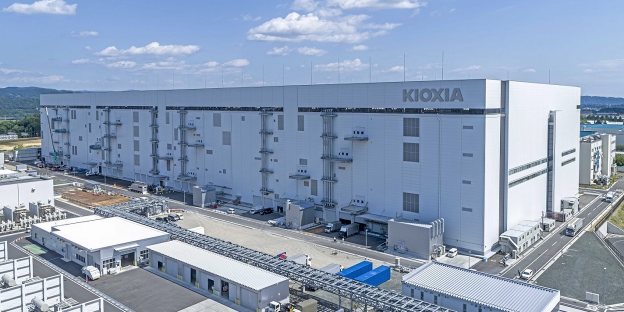
According to South Korean outlet Yonhap Infomax, shares of Japan’s NAND flash producer Kioxia have been rising sharply amid a supply shortage in the NAND market. The report notes that SK hynix — which invested KRW 3.9 trillion in Kioxia in 2018 — is now realizing significant valuation gains after years of waiting. The report notes that as of the 16th, Kioxia’s shares on the Tokyo Stock Exchange had surged 70% over the past month.
With Kioxia’s stock surging, SK hynix — a major investor — is also benefiting. As the report notes, in 2018 SK hynix invested JPY 395 billion (about KRW 3.9 trillion) in a Bain Capital–led consortium that acquired Kioxia (formerly Toshiba Memory), allocating JPY 266 billion to Bain’s fund and JPY 129 billion to convertible bonds that, if exercised, could give it an effective 14% stake.
What SK hynix intends to do with Kioxia, still classified as a long-term investment, remains uncertain. As the report notes, a January securities filing stated that the company is weighing options including exiting, raising its stake, or maintaining its holdings. Meanwhile, Kioxia has capped SK hynix’s voting rights at 15% through 2028, the report adds.
Notably, SK Group Chairman Chey Tae-won told Nikkei in 2024 that he viewed Kioxia not just as a financial investment but potentially as a strategic partner. His remarks hinted that SK hynix and Kioxia might explore ways to work together.
AI Boom Reshapes NAND and SSD Demand
An analyst cited in the report noted that surging AI inference demand has created a supply shortage in NAND. Kioxia is moving to capitalize on the AI boom. According to Nikkei, the company, in partnership with NVIDIA, plans to commercialize SSDs by 2027 with read speeds nearly 100 times faster than current models. The report highlights that these SSDs are tailored for AI servers and intended to partially replace HBM as GPU memory expanders. By 2029, Nikkei notes, Kioxia expects nearly half of NAND demand to be AI-related.
According to TrendForce, the massive data volumes generated by AI are straining global storage infrastructure, pushing high-performance yet higher-cost SSDs into the market spotlight. In particular, shipments of high-capacity QLC SSDs could see explosive growth in 2026.
Read more
- [News] Kioxia Reportedly Eyes 2027 Launch for NVIDIA-Partnered AI SSDs with 100x Speed Boost
- Soaring Inference AI Demand Triggers Severe Nearline HDD Shortages; QLC SSD Shipments Poised for Breakout in 2026, Says TrendForce
(Photo credit: Kioxia)
Please note that this article cites information from Yonhap Infomax, Nikkei, and Kioxia.