[News] U.S. Reportedly Mulls Annual Site License on Exports to Samsung, SK hynix China Fabs
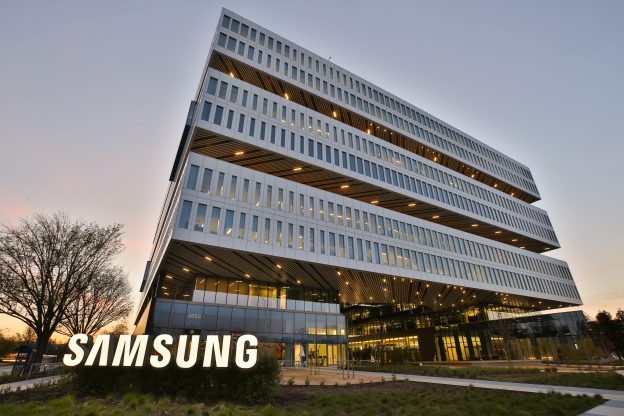
According to Bloomberg, the U.S. is reportedly weighing an annual approval plan for exports of chipmaking equipment to Samsung and SK hynix facilities in China. The measure follows the Trump administration’s decision to revoke Biden-era waivers that had granted the Korean firms indefinite clearance to ship such supplies. Those waivers, known as validated end user (VEU) designations, are scheduled to expire at the end of this year, the report highlights.
Sources indicate that U.S. Commerce Department officials proposed a “site license” to their Korean counterparts last week. Under the plan, Samsung and SK hynix would need to obtain Washington’s approval each year for shipments of restricted equipment, parts, and materials, with the quantities specified in detail, the report notes.
Under the proposed plan, individual permits for each delivery would not be required, easing uncertainty. However, separate approvals would still be necessary for items outside the planned quota, while the likelihood of restoring the VEU system is considered low, according to South Korean media outlet ETNews.
China Remains Critical Hub for Samsung and SK hynix
The U.S.’s export control proposal on chipmaking supplies to Samsung and SK hynix’s China sites could be significant for the companies. As Korea Economic Daily notes, their Chinese plants primarily produce general-purpose chips rather than advanced products such as HBM. Even so, China remains a critical manufacturing base for both memory giants.
According to TrendForce, around 30–35% of Samsung’s total NAND output is expected to come from China in 2025. On the other hand, TrendForce projects that by 2025, about 35–40% of SK hynix’s DRAM output will come from China. For SK hynix, China plays an even bigger role in NAND production, expected to account for 40–45% of its total NAND output in 2025, as noted by TrendForce.
U.S. to Revoke TSMC’s Nanjing VEU
Meanwhile, beyond the Korean chipmakers, Washington has also informed TSMC that its Nanjing fab’s VEU status will be revoked by December 31, 2025, Bloomberg reported, citing a company statement.
However, unlike the Korean firms’ significant share of production in China, Taiwan’s Ministry of Economic Affairs noted that TSMC’s Nanjing plant, which houses its 16nm technology, accounts for only about 3% of its global capacity, a proportion expected to shrink further, according to the Commercial Times.
Read more
- [News] U.S. Revokes China Chipmaking Tool Licenses for Samsung, SK hynix: Decoding Market Impact
- [News] US to End TSMC Nanjing Waiver by End-2025: Decoding the Impact on the Foundry and Supply Chain
(Photo credit: Samsung)
Please note that this article cites information from Bloomberg, ETNews, Korea Economic Daily, and Commercial Times.