[News] Samsung Sees Mature Node Uptick on 4–8nm Demand Since June, Easing Foundry Woes
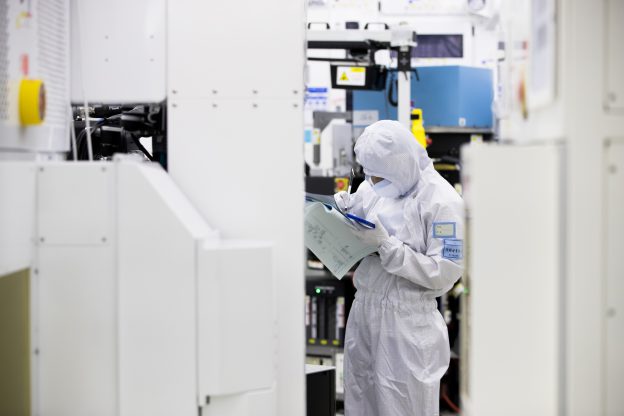
According to Chosun Biz, utilization rates at Samsung Electronics’ mature node production lines—previously a drag on its foundry business—are reportedly now recovering. The report adds that the ramp-up in mature node production may help ease the company’s annual operating losses.
As cited in the report, sources on August 1 indicate that utilization rates at Samsung’s Pyeongtaek Campus P2 and P3 production lines—which had dropped below 50 percent last year—have now reached their highest levels. These lines handle mature nodes, including 4nm, 5nm, and 7nm. Meanwhile, mature node lines at Samsung’s Giheung Campus are also recovering quickly, driven by rising 8nm orders, the report adds.
As the report notes, since June, continued volume input into mature node production lines appears to have driven utilization to its peak. This improvement is linked to the mass production of several products, including the base die for Samsung’s sixth-generation High Bandwidth Memory (HBM4), cryptocurrency mining chips for Chinese clients, Google’s mobile application processors (APs), and older-generation APs from Samsung’s System LSI division.
Additionally, as Wccftech highlights, the utilization rate has reportedly also been boosted by Samsung’s contracts with Nintendo. According to Bloomberg, sources indicate that Nintendo has selected Samsung to manufacture the main chip for its Switch 2. The chip, designed by NVIDIA, is reportedly being produced using Samsung’s 8nm process, as noted in the report.
Samsung Electronics posted a 94 percent year-over-year decline in operating profit for its foundry business in the second quarter of 2025, which ended on June 30. In its press release, the company cited persistently low utilization rates at mature nodes as a major factor contributing to the ongoing weakness.
Apart from its mature nodes, Samsung has also been building momentum in its advanced node business. The company recently announced a 22.8 trillion won (approximately USD 16.5 billion) chip foundry deal with Tesla to manufacture next-generation Full Self-Driving (FSD) AI6 chips at its Texas facility, as noted by Reuters.
According to TrendForce, the agreement suggests that Samsung’s efforts to stabilize its 2nm process are beginning to yield results, though uncertainties remain, as the outcome will depend on the performance of the company’s initial 2nm output.
Read more
- [News] Samsung to Produce Tesla’s AI6 Chips, Escalating 2nm Race with TSMC
- [News] Samsung Chip Division Profit Plunges 90% in Q2; H2 Hopes on HBM3E, 2nm
(Photo credit: Samsung)
Please note that this article cites information from Chosun Biz, Wccftech, Bloomberg, Samsung, and Reuters.