[News] TSMC Accelerates 2nd Arizona Fab Production; Ramp-Up Schedules for Japan, Germany Undisclosed
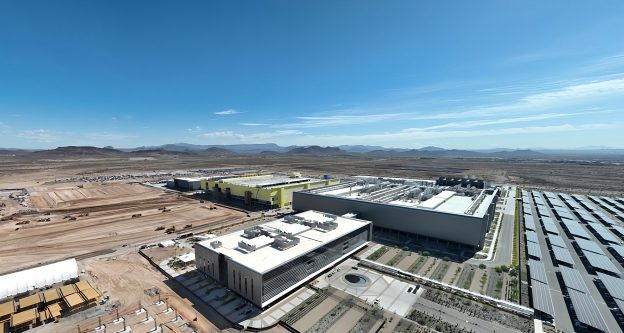
TSMC CEO C.C. Wei leads the company’s 2025 second quarter earnings call today and shares the latest progress on the company’s Arizona facilities. Notably, he says that construction of the second fab in Arizona, which uses the 3nm process, has already been completed, and the company is now working to accelerate the volume production schedule by several quarters to meet customer demand.
Wei also notes that construction has already begun on the third fab in Arizona, which will adopt the 2nm and A16 processes. TSMC is aiming to accelerate the production timeline for this facility as well.
Meanwhile, the fourth fab will also feature the 2nm and A16 processes, while the fifth and sixth fabs are set to adopt even more advanced technologies. This expansion will enable TSMC to build out a giga-fab cluster in Arizona. Once completed, approximately 30% of the company’s 2nm and more advanced capacity will be based in Arizona.
TSMC’s first fab in Arizona began high-volume production in the fourth quarter of 2024, using N4 process technology with yields comparable to those of its fabs in Taiwan, according to Wei.
The company has invested a total of $165 billion in its U.S. expansion, which includes six fabs, two advanced packaging facilities, and one R&D center.
Ramp-Up Details for Japan and Germany Fabs Left Out
It is worth noting that while TSMC’s expansion timeline in Arizona is clearly outlined, the schedules for its projects in Japan and Germany appear less defined by comparison.
Regarding Japan, Wei states that the company’s first specialty technology fab in Kumamoto began volume production in late 2024 with very good yields. Construction of the second specialty fab is expected to begin later this year, pending the readiness of local infrastructure. However, a clear timeline for ramp-up has not been provided, as it will depend on customer demand and market conditions.
In Germany, similarly, Wei only notes that plans to build a specialty technology fab in Dresden are progressing smoothly. However, the ramp-up schedule will largely depend on customer demand and market conditions.
Despite this, TSMC emphasizes that its investments in the U.S. will not affect its plans in Japan and Germany, as those projects are primarily focused on specialty technologies—distinct from the advanced process expansions underway in the U.S. Wei also notes that because the fabs in Japan and Germany are centered on specialty technologies, they are less likely to be affected by concerns over overcapacity in mature nodes.
Read more
- [News] TSMC Raises 2025 Sales Growth to 30%, Forecasts 8% QoQ USD Revenue Growth amid Exchange Headwinds
- [News] TSMC Reports Record Q2 Profit, EPS at NT$15.36 Despite Strong Taiwan Dollar
(Photo credit: TSMC)
Please note that this article cites information from TSMC.