[News] ASML Warns of Stalled 2026 Growth as Geopolitical Risks Threaten Decade-Long Run
ASML released its Q2 2025 financial results today. While second-quarter bookings exceeded market expectations, the company cautioned that it may fall short of growth in 2026, according to Reuters.
As noted by its press release, ASML notes that while the fundamentals for AI customers remain strong heading into 2026, rising uncertainty stemming from macroeconomic and geopolitical factors has made it difficult to confirm growth for 2026 at this stage.
If it happens, 2026 would be the first year with no revenue growth—breaking a streak of uninterrupted increases since 2012, as noted by Reuters.
Meanwhile, ASML said it now expects full-year 2025 net sales to grow by 15%, narrowing its earlier guidance of EUR 30 billion to EUR 35 billion. As CNBC notes, a 15% growth rate would translate to a revenue target of approximately EUR 32.5 billion for the year.
For Q2 2025, ASML reported total net sales of EUR 7.7 billion, reaching the upper end of its guidance range. Gross margin stood at 53.7%, exceeding expectations, according to the company’s press release.
In addition, ASML reported Q2 net bookings of EUR 5.5 billion, a key indicator of order demand, surpassing analyst expectations of EUR 4.19 billion, as highlighted by CNBC.
China Holds 27% Share of ASML’s Q2 Sales Despite Export Curbs
By shipment destination, ASML reported that China was its second-largest market in Q2, accounting for 27% of net system sales, the same share as in the previous quarter, according to the company’s press release. During its Q1 earnings call, the company projected that China would contribute over 25% of its total 2025 sales, according to Reuters.
Notably, Taiwan’s share of net system sales saw a sharp increase from 16% in Q1 to 35% in Q2, potentially driven by sales to TSMC.
Chinese demand also remained strong, making up 27% of all equipment sales over the past three quarters, indicating that the country’s chipmakers have continued to purchase less advanced tools in anticipation of further U.S.-led export restrictions, according to Reuters.
Read more
- [News] China’s SiCarrier Reportedly Seeks $2.8B in Major Fundraising Push After SEMICON Splash
- [News] ASML: China Sales Could Top 25% in 2025, but Homegrown EUV Still Years Off
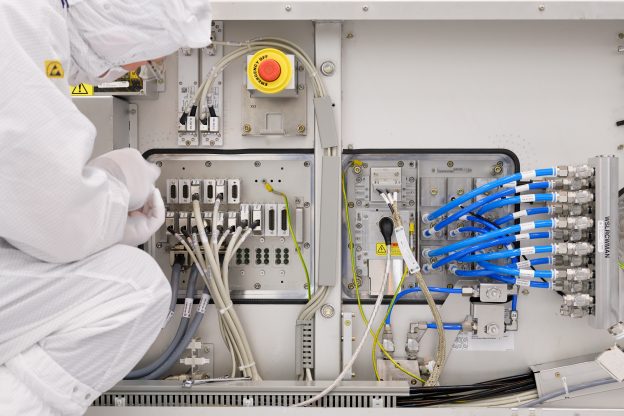
(Photo credit: ASML)