[News] NVIDIA’s RTX 50 Super Refresh Faces Launch Uncertainty as 3GB GDDR7 Reportedly Costs 3× Than 2GB
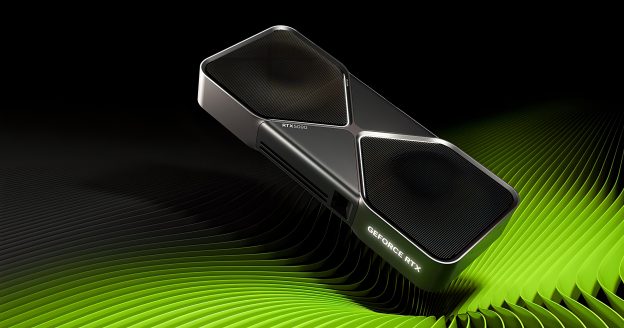
Memory is becoming a critical bottleneck in the AI era, and even NVIDIA is not immune to the pressure. Citing VideoCardz, Tom’s Hardware reports that the company’s upcoming GeForce RTX 50 Super refresh could face an unexpected delay, with surging 3GB GDDR7 memory costs emerging as the key hurdle.
The reports suggest that one board partner has already received RTX 50 Super GPUs, but NVIDIA has asked the firm to hold off on the launch until memory pricing improves. If costs remain elevated, NVIDIA would face a difficult trade-off: raise retail prices well above its targeted MSRP or force board partners to absorb the additional expenses, potentially leaving them selling GPUs at a loss, according to Tom’s Hardware.
The cost pressure stems from NVIDIA’s shift to higher-density memory. According to the reports, the rumored RTX 50 Super lineup would adopt 3GB GDDR7 chips, delivering a 50% capacity increase over the 2GB modules used in current RTX 50-series GPUs while allowing the chip giant to boost VRAM without redesigning the memory bus architecture. However, sources told VideoCardz that each 3GB GDDR7 chip is currently priced at around US$60–70, compared with roughly US$20 for a conventional 2GB module.
The affected lineup reportedly includes the RTX 5080 Super, RTX 5070 Ti Super, RTX 5070 Super, and RTX 5050 9GB. The RTX 5080 Super and RTX 5070 Ti Super are expected to feature 24GB of GDDR7 VRAM with a 256-bit memory bus, while the RTX 5070 Super could come with 18GB of VRAM on a 192-bit bus, Tom’s Hardware suggests.
Memory Crunch Reshapes NVIDIA’s Gaming GPU Strategy
The memory crunch could mark another shift in NVIDIA’s gaming GPU strategy. According to Tom’s Hardware, NVIDIA previously supplied board partners with both GPU dies and VRAM chips, but changed its approach in late 2025 as memory shortages intensified. Under the new model, board partners are now responsible for sourcing their own memory, forcing them to compete for increasingly limited VRAM supply.
Meanwhile, an April CNBC report suggested that 2026 could mark the first year in nearly three decades that NVIDIA does not launch a new GeForce generation, if market expectations prove accurate — a notable shift for a company that built its early success on gaming GPUs.
NVIDIA’s RTX 50-series GeForce GPUs debuted at CES in January 2025. With CES 2026 and GTC 2026 now concluded, speculation is mounting that the company may break its long-standing release cadence — although NVIDIA has historically unveiled new hardware as late as September, CNBC added.
Read more
- [News] NVIDIA Next-Gen Rosa CPU May Adopt TSMC A16 with Back-Side Power Delivery, Eyes 2028 Launch
- [News] AMD, NVIDIA and Others Reportedly to Debut New Chips at CES 2026, Spotlighting TSMC 3nm and 5nm
(Photo credit: NVIDIA)