[News] Korea’s High-Purity CO₂ Inventory Reportedly Falls Below One Month; Samsung, SK hynix Under Pressure
Recent geopolitical tensions have created another potential bottleneck for Korea’s semiconductor supply chain. The supply of high-purity carbon dioxide (CO₂) used in advanced semiconductor manufacturing has reportedly tightened. According to The Elec, industry sources say total inventory across the supply chain has recently fallen below one month’s supply. Under normal conditions, semiconductor manufacturers and gas suppliers each maintain about two weeks of inventory, equivalent to roughly one month’s supply in total.
Samsung Electronics is estimated to consume approximately 1,800–2,000 metric tons of high-purity CO₂ each month, while SK hynix uses roughly 600–700 metric tons, the report says.
The report notes that production at Samsung Electronics and SK hynix has not yet been affected. However, shrinking inventory buffers have prompted both companies to step up procurement efforts, although additional supply remains difficult to secure even at higher prices.
Still, according to Mydrivers, sources say that if supply tightness persists, Samsung and SK hynix’s advanced DRAM and NAND production will face pressure, making price increases inevitable.
Why High-Purity CO₂ Matters for Chip Manufacturing
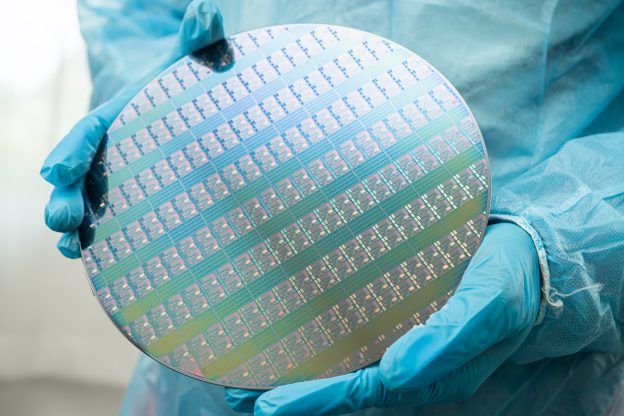
High-purity CO₂ plays a key role in supercritical semiconductor cleaning processes. The Elec notes that when CO₂ exceeds its critical temperature and pressure, it enters a supercritical state that combines the properties of liquids and gases. This enables it to effectively dissolve wafer residues while penetrating deep into fine semiconductor patterns to remove contaminants, making the technology well suited for advanced semiconductor manufacturing.
The availability of high-purity CO₂ is closely tied to the supply of its upstream feedstock. As The Elec notes, CO₂ feedstock is recovered as a byproduct of oil refining, petrochemical production, and hydrogen manufacturing. Instability in crude oil supplies caused by tensions in the Middle East, coupled with lower operating rates at South Korea’s petrochemical plants, has significantly reduced the availability of CO₂ feedstock.
The report adds that liquefied CO₂ prices have risen by roughly 20% since the beginning of the year, with industry sources expecting supply tightness to persist through the end of 2026. South Korea’s major suppliers of high-purity CO₂ include Taekyung Chemical, Sundo Chemical, Dongkwang Chemical, and SK Airplus, with Taekyung Chemical recognized as the country’s leading supplier.
An industry expert cited by The Elec said geopolitical risks stemming from the Middle East are once again disrupting semiconductor material supplies, following earlier disruptions involving helium, anhydrous hydrogen fluoride, and propylene glycol monomethyl ether acetate (PGMEA).
Read more
- [News] Decoding Impact: Asia Chipmakers Move to Tackle Helium Strain as Intel Gains Relative Buffer
- [News] Key Semiconductor Gas WF₆ Prices Reportedly Surge Over 200% as Supply Tightens Ahead of Japan Output Cuts
(Photo credit: FREEPIK)