[News] MLCC Turns From Electronic Rice Into a Gold-Like Rally, With Quotes Reportedly Updating Every 30 Minutes
As the surge in AI server demand continues, MLCC (multilayer ceramic capacitors) prices continue to climb. According to YiCai Global, in Shenzhen’s Huaqiangbei market, quotations are reportedly changing at extreme speed, with traders describing a situation where MLCC prices are being updated as frequently as every 30 minutes.
As noted by Yicai, some sources even liken the surge in MLCC prices—often dubbed the “electronic rice” of the industry—to a rally outpacing gold.
Sources cited by the report also indicated that in Huaqiangbei, MLCC prices have been climbing for three months, with the past month seeing the steepest spike—some products reportedly multiplying several-fold. According to 36Kr, since the rally began in late February, spot MLCC prices have broadly climbed 15%–20%. High-capacitance parts used in AI servers have surged even faster, rising 50%–60%.
Notably, 36Kr points out that global leaders including Murata, Taiyo Yuden, and Samsung Electro-Mechanics have collectively raised prices. Utilization rates at high-end production lines have topped 90%, with lead times for constrained orders extending to around four months, as per the report.
MLCC Prices Spike Across Huaqiangbei
While high-capacitance components are leading demand, price increases have broadened across the entire MLCC spot market. One trader cited by South China Morning Post said certain models have jumped from about RMB 10 per 1,000 units to around RMB 40 (≈US$5.90).
Another supplier handling products from Samsung Electro-Mechanics and domestic makers such as Chaozhou Three-Circle Group noted that in-demand parts—including 0805 22μF MLCCs—have surged more than 20-fold.
Beyond high-capacitance components, server-grade MLCCs across multiple categories are also seeing steep price increases, according to Yicai. A trader primarily dealing in Samsung MLCCs said prices across all models have risen sharply since May, with some reels climbing from RMB 100 to as high as RMB 400–500.
Supply tightness is also intensifying alongside the price spike. For instance, a Murata 1206 47μF (476), 10V, X5R MLCC saw five traders polled, with four reporting no stock available, the report notes.
The tightening trend has also extended to domestic MLCC players in China. Yicai notes that some Fenghua Advanced products are now priced at levels comparable to imported counterparts, while lead times have also extended from a typical 3–6 weeks domestically to more than 20 weeks for high-end specifications, and over 12 weeks for standard grades.
AI Platform Design Shift Reshapes MLCC Demand Structure
According to TrendForce’s latest MLCC industry research, the ongoing AI arms race among global CSPs is accelerating the adoption of in-house ASIC accelerators, which increasingly rely on small-form-factor, high-capacitance, high-temperature-resistant MLCCs. With supplier capacity expansion lagging behind demand growth, the risk of structural shortages in the second half of 2026 is becoming increasingly difficult to ignore.
TrendForce notes that next-generation AI accelerator platforms are undergoing frequent design modifications during the final qualification stage, resulting in substantial increases in high-end MLCC content per board. For example, AMD replaced all aluminum electrolytic and tantalum capacitors in the bill of materials (BOM) for its MI450 platform with MLCCs during validation.
As a result, usage of 47μF 2.5V X6S 0402 MLCCs surged from 1,440 units per board to 10,544 units, representing a 632% increase. Similarly, demand for 100μF 4V X6S 0805 MLCCs on NVIDIA’s Vera Rubin platform rose from 320 units per board to 500 units, according to TrendForce.
Read more
- [News] Samsung Electro-Mechanics Sees 18%+ Annual Silicon Capacitor Market Growth, Boosts MLCC, FC-BGA Integration
- [News] MLCC Giant Murata Reportedly Confirms April 1 Price Hike on Key Components
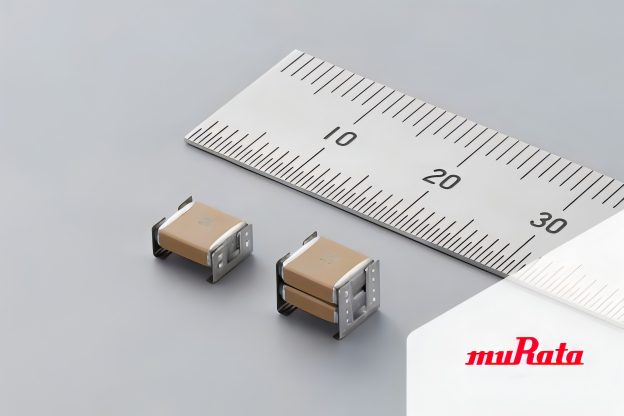
(Photo credit: Murata)