[News] Marvell Says It Is in Talks with TSMC on A14 for Next-Gen AI Connectivity Chips, Joining Early-Adopter Ranks

Marvell is counting on continued adoption of leading-edge nodes to drive growth in high-speed connectivity solutions for AI data centers. According to Nikkei, Chris Koopmans, Marvell’s president and chief operating officer, said the company has already begun discussions with TSMC regarding the use of its A14 node for future-generation products.
Connectivity chips are essential for high-speed data movement within and between AI data centers. According to the report, Marvell has aggressively pushed the technology forward, developing the digital signal processors (DSPs) used in the industry’s first 1.6T interconnect platform on TSMC’s 3nm node. The company is also the first to adopt the 2nm node for DSPs and data center interconnect (DCI) pluggables.
Marvell’s engagement with TSMC on A14 is notable, as the earliest adopters of leading-edge nodes are typically industry heavyweights such as Apple, NVIDIA, AMD, and MediaTek due to the enormous development and manufacturing costs involved, the report adds. TSMC’s A14 process is scheduled to enter production in 2028.
Notably, Marvell has been proactive in securing future capacity. According to the report, the company shares rolling five-year forecasts with suppliers to improve long-term planning and strengthen confidence in future demand. It has also committed $1 billion in prepayments to secure future manufacturing capacity.
Marvell is not alone in pursuing leading-edge manufacturing for connectivity chips. According to Investing.com, Broadcom began sampling a 3nm DSP for 1.6T optical transceivers in March, highlighting an industry-wide push to leverage advanced process technologies to meet growing bandwidth and power-efficiency demands in AI data centers.
Why Marvell Keeps Pushing to Advanced Nodes
Marvell’s pursuit of advanced nodes has long been a core part of its strategy. According to Nikkei, while the company once relied on manufacturers including Samsung and GlobalFoundries, it later consolidated production with TSMC as it accelerated its push into data center infrastructure. During that shift, Marvell moved directly from 16nm to 5nm, bypassing 7nm—a rare step for chip designers.
Koopmans said Marvell’s adoption of leading-edge nodes for products such as digital signal processors (DSPs) is largely driven by power efficiency. Advanced process technologies can substantially increase bandwidth while limiting growth in power consumption, a key requirement for AI data centers, the report states.
Marvell has transformed into an AI infrastructure company. According to Nikkei, in 2016, data center revenue accounted for less than 10% of its business, or under $200 million, while more than 60% came from consumer electronics-related products. Driven by the AI investment boom, data center products now contribute more than 75% of the company’s total revenue. The company has also built a close relationship with NVIDIA, which has invested $2 billion in it, the report adds.
Read more
- [Insights] NVIDIA’s US$2B Marvell Deal: What’s the Strategic Significance for CPO and AI Interconnects?
- NVIDIA Compute Architecture Paves the Way for Scale-Up Optical Interconnects; CPO Penetration in AI Data Centers Expected to Rise Steadily, Says TrendForce
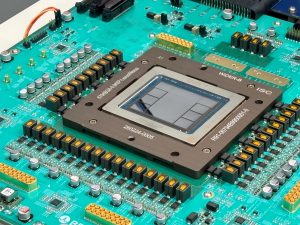
(Photo credit: Marvell)