[News] South Korea’s Chip Exports to China Surge 243% YoY in May as Beijing’s AI Push Fuels Memory Demand
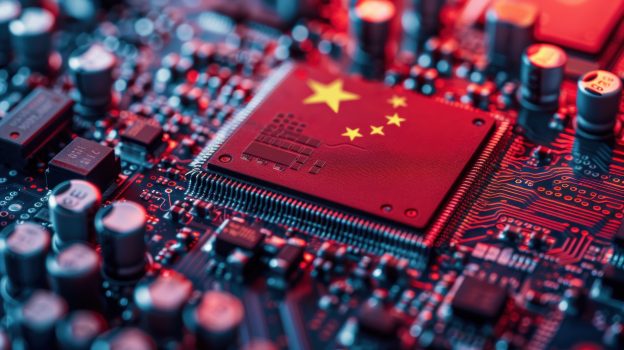
China’s AI-driven chip demand is helping lift South Korea’s trade surplus with the country. According to South China Morning Post, citing South Korea’s Ministry of Trade, Industry and Resources, the country’s trade balance with China improved from a US$764 million deficit in December 2025 to a US$1.1 billion surplus in February, before expanding to US$3.8 billion in May. Semiconductor exports to China jumped 243% year over year in May, ministry data showed.
Memory chip exports to China were a key driver of South Korea’s return to a trade surplus with China. According to the report, the resulting supply tightness sent prices soaring. TrendForce notes that the memory industry experienced a significant boost in 1Q26 due to rapidly rising contract prices for conventional DRAM, which increased by approximately 93% to 98% QoQ.
South Korea’s trade position with China has improved even as other East Asian economies lose ground. According to the report, Japan’s exports to China have declined since 2022, while Taiwan’s trade balance with China has slipped into deficit as U.S. export controls redirect more semiconductor shipments to the United States.
The report suggests South Korea’s memory chip leadership could keep it ahead of many regional rivals in the near term, supported by resilient AI demand and persistent DRAM shortages. That edge may not last, however, as the rise of Chinese memory makers such as CXMT could gradually chip away at South Korean suppliers’ market share.
China’s AI Expansion Fuels Memory Demand and Efficiency Efforts
The trend may partly reflect rising memory demand tied to China’s expanding deployment of domestic AI chips. As noted by Asia Business Daily, citing industry analysts, if major Chinese tech firms switch from NVIDIA chips to Huawei chips, they will need to use more chips to achieve equivalent computing performance, driving up demand for both DRAM and HBM. As major Chinese tech companies such as Alibaba and Tencent increasingly adopt Huawei’s Ascend series as an alternative to NVIDIA, demand for memory-intensive AI infrastructure is expected to remain strong. Huawei’s share of China’s AI server chip market approached 40% last year, the report adds.
The resulting strain on memory supply is also driving efforts to improve efficiency and reduce reliance on HBM. According to MyDrivers, China’s shortage of high-performance memory has accelerated the development of optimization technologies. ModeBest, Tsinghua University, and the open-source AI community OpenBMB recently unveiled BitCPM-CANN, described as the first native end-to-end 1.58-bit (ternary) LLM training system built on Huawei Ascend NPUs. Using ternary quantization, the system cuts memory usage by six times while lowering power consumption, potentially easing dependence on HBM.
Read more
- Tight DRAM Supply Gives Suppliers Greater Pricing Power in HBM, with HBM Contract Prices Expected to Surge Multiples Higher in 2027, Says TrendForce
- [News] U.S. Reportedly Approves NVIDIA H200 Sales to 10 Chinese Firms Including Alibaba, ByteDance, but Deals Stall
(Photo credit: FREEPIK)