[News] Intel Roadmap Leak Hints at NVIDIA GPUs in 2028 Titan Lake-B/BX; Hammer Lake May Revive Hyperthreading
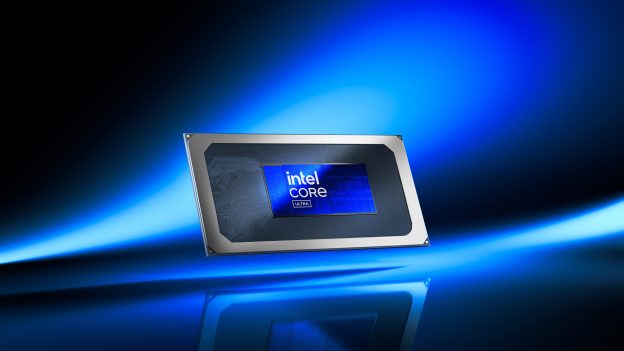
Intel appears to be preparing several upcoming CPU architectures, with recent leaks shedding light on its future roadmap. According to Notebookcheck, citing Moores Law Is Dead, the company is reportedly planning Intel Razer Lake, Nova Lake-AX, Titan Lake, and Hammer Lake architectures spanning several CPU generations in the coming years.
Intel’s Razer Lake Strategy Takes Shape Across Segments
As the report notes, following the launch of Intel’s Nova Lake desktop CPUs, potentially in late 2026, the company is expected to introduce Razer Lake processors for both laptops and desktops in 2027.
Within the Razer Lake lineup, low-end and mid-range mobile and desktop CPUs are expected to largely reuse Nova Lake designs, retaining the same Coyote Cove P-cores and Arctic Wolf E-cores. In contrast, Intel is said to reserve new Griffin Cove P-cores for mobile HX chips and flagship RZL-S desktop processors while keeping Arctic Wolf E-cores unchanged. Intel has also reportedly renamed Nova Lake-AX to Razer Lake-AX, with the chip positioned as the company’s competitor to AMD’s Halo APU, the report adds.
Intel’s Titan Lake May Introduce NVIDIA GPUs and Unified Cores
After Razer Lake, Intel is expected to introduce Titan Lake CPUs in 2028. Unlike Razer Lake, however, Titan Lake is reportedly planned exclusively for mobile devices, with no desktop processors expected. Within the lineup, higher-end variants may adopt NVIDIA GPU chiplets, while lower-power models are said to transition to Intel’s first-generation Unified Cores.
Notably, Tweaktown reports that variants equipped with an NVIDIA RTX GPU chiplet may fall under the Titan Lake-B/BX and Serpent Lake designations, while adopting Memory on Package (MoP) similar to Razer Lake-AX. These chips are rumored to use an older-generation Razer Lake CPU tile with Griffin Cove P-cores and Arctic Wolf/Golden Eagle E-cores. Among them, the flagship “BX” variant is expected to support configurations of up to 8P+16E+4LPE (28 hybrid cores).
Meanwhile, low-end U, P, and PX-series Titan Lake laptop processors are expected to adopt Copper Shark CPU cores. According to Notebookcheck, the architecture represents Intel’s first-generation “Unified Cores,” with the same Copper Shark IP reportedly used across both high-performance P-cores and efficiency-focused E-cores.
Hammer Lake: The Return of Hyperthreading?
Hammer Lake is expected to mark Intel’s next significant architecture update for both desktops and laptops. According to Notebookcheck, it is reportedly where Intel plans to restore Simultaneous Multithreading (SMT), or Hyperthreading, a feature the company dropped beginning with its mobile Lunar Lake processors. The move would also contrast with Intel’s upcoming Nova Lake desktop CPUs, which are expected to ship without Hyperthreading.
In addition, Hammer Lake is reportedly set to introduce Thunder Hawk, Intel’s second-generation Unified Cores. Notebookcheck notes that Intel is expected to use the same Thunder Hawk IP for both P-cores and E-cores, although most Hammer Lake processors will rely primarily on P-cores.
Separately, Intel is also said to plan a shared desktop socket across Nova Lake, Razer Lake, and Hammer Lake, potentially extending platform longevity for users.
Read more
- [News] Intel Says AI Inference Pushes CPU Ratio From 1:8 Toward 1:1; 18A Yield Target Advanced to Mid-Year
- [News] NVIDIA GTC Could Spotlight CPUs for Agent AI with Intel Partnership and CPU Racks Highlighted
(Photo credit: Intel)