[News] NAND Leaders Bet on Taiwan’s DRAM Maker: Why Kioxia, SanDisk, SK hynix Back Nanya Tech’s $2.5B Deal?
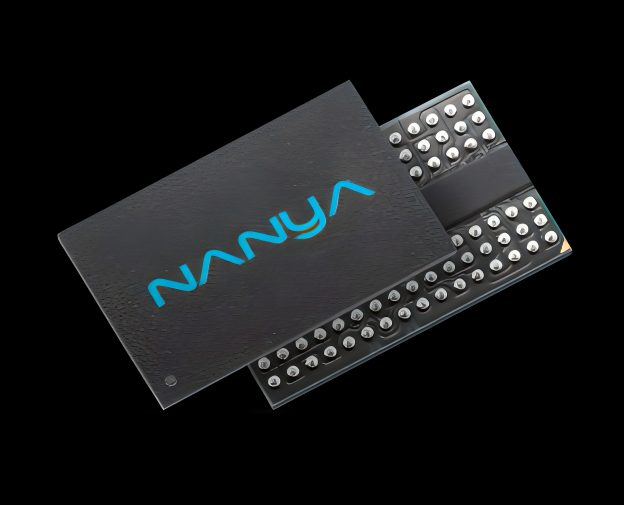
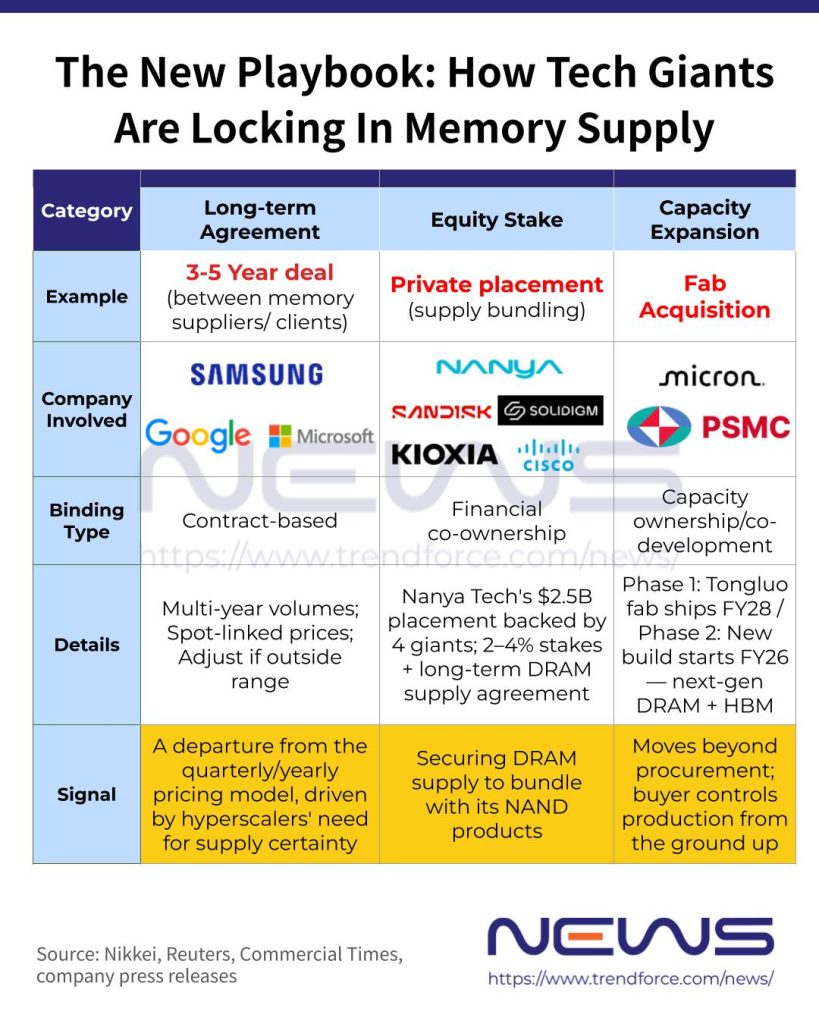
The memory market may be moving beyond a “zero-sum” game. Following Micron’s acquisition of PSMC’s fab to expand DRAM capacity in early 2026, collaboration is now extending to securing bundled supply across DRAM and NAND. Nanya Technology, citing Reuters, said it has raised $2.5 billion via a private placement backed by SanDisk, Kioxia, SK hynix subsidiary Solidigm, and networking giant Cisco Systems—late Wednesday.
The significance is clear: the Economic Daily News reports this is the first time four global tech giants have simultaneously taken equity stakes in Taiwan’s memory industry. Notably, Nikkei adds that the move marks Kioxia’s first-ever investment in a memory manufacturer.
NAND Leaders Bet on Taiwan’s DRAM Player
As noted by Commercial Times and the Economic Daily News, Nanya Technology issued over 350,000 shares in the private placement, raising roughly NT$78.7 billion at NT$223.9 per share—about a 15% discount to the recent multi-day average and just 1.15% below the March 25 closing price.
Allocation by investor reportedly shows SanDisk subscribing to 138,685 shares, Kioxia 70,000 shares, Solidigm 71,393 shares, and Cisco 71,500 shares, translating into ownership stakes of roughly 2%–4% each. Nikkei notes that SanDisk is investing NT$31 billion, Kioxia Holdings NT$15.6 billion (US$490 million), and both Solidigm—SK hynix’s U.S. subsidiary—and Cisco Systems roughly NT$16 billion each, highlighting broad-based support from leading memory and networking companies.
It raises questions why NAND-focused companies that don’t make DRAM would invest in Nanya Technology. Nikkei points out that the two memory types are closely linked: DRAM handles temporary data processing before information is written to NAND, a process central to solid-state drives, a core product for Kioxia.
The report also highlights that the deal between Nanya and Kioxia includes a long-term supply agreement for Nanya to provide DRAM to Kioxia. With a DRAM shortage persisting since fall 2025, Kioxia’s usual supply channels have been tight, forcing the company to turn to the spot market and other sources at elevated prices, according to Nikkei.
Analysts cited by Commercial Times add that as major memory makers shift resources toward high-margin HBM, the supply of mainstream DRAM—particularly DDR4 and DDR5—has been squeezed. Taking stakes in Nanya serves two strategic purposes: securing DRAM supply to bundle with existing storage products and sharing the costs and risks of advanced process R&D through alliances, the report suggests.
Various Ways to Secure Long-term Memory Supply
The recent investments by Kioxia, SanDisk, and SK hynix highlight how companies are exploring multiple strategies to lock in long-term memory supply. According to EBN News, Samsung has also shifted its previous stance and is reportedly in talks with Google and Microsoft on long-term supply agreements lasting three to five years. With memory emerging as a key bottleneck in AI data center expansion, major tech firms are increasingly pursuing such deals to secure stable supply.
Notably, as the Economic Daily News points out, Taiwan’s memory industry is seeing a wave of fundraising moves. Following Nanya Technology, NAND Flash controller IC firm Phison plans a private placement of up to 18,000 shares, while DRAM player Winbond and Powerchip Technology are set to issue GDRs, the report adds. With Nanya already backed by global tech giants, market attention is now on whether these upcoming rounds will also draw international heavyweights.
Read more
- [News] Nanya Tech: DRAM Up Month by Month in 1Q, Sharp 2Q Jump Ahead, Shortage Through 2028
- [News] Micron Reportedly Schedules March 26 Tool Move-In at PSMC Tongluo Fab, Signaling Next Deal Phase
(Photo credit: Nanya Tech)