[News] Samsung Reportedly Eyes Long-Term Memory Deals with Google, Microsoft; May Include $10B+ Prepayments
Memory giants are reportedly moving toward multi-year supply agreements to enhance stability, with potential deal structures and prospective customers beginning to take shape. According to EBN News, industry sources say Samsung Electronics has recently been in talks with Google and Microsoft over long-term supply deals. As memory has become a key bottleneck in the expansion of AI data centers, Big Tech companies are increasingly seeking such agreements to secure stable supply.
Regarding deal structures, the report suggests the most likely model would fix volumes over a multi-year period while linking pricing to spot market levels. Under this approach, contract prices would adjust if spot prices move beyond a predefined range, the report notes.
Within this framework, Big Tech companies would provide large upfront payments to Samsung Electronics, with the prepayments offset if agreed volumes are not purchased within three to five years. Sources add that Samsung is said to be discussing more than $10 billion in prepayments from Microsoft, with any shortfall in committed volumes deducted from the upfront payment.
The report adds that memory suppliers are expected to secure long-term supply agreements with major Big Tech firms in the first half of the year. Beyond Samsung Electronics, according to ZDNet, Micron is also advancing similar deals, having disclosed its first five-year strategic customer agreement (SCA) in its fiscal 2026 second-quarter earnings.
Potential Prepayment-Backed LTAs May Redefine Memory Market Cycles
These potential contract structures could prove significant for the industry. Historically, the memory sector has experienced recurring downcycles, as large-scale capacity expansions and demand fluctuations have often fallen out of sync. According to EBN News, with long-term supply agreements in place, however, companies could gain visibility into demand for more than three years, enabling more confident investment while helping to limit sharp price declines and support more stable margins.
EBN News also highlights that a key feature of these agreements is their “binding” nature. It notes that similar deals were reached around 2019 but lacked enforceability, allowing customers to cancel orders. By contrast, the agreements currently under discussion are designed to ensure execution through large upfront prepayments.
Against this backdrop, Samsung Electronics’ investment could expand further if such agreements are finalized, EBN News adds. Improved demand visibility would reduce hesitation around capital spending. Micron, for example, has announced plans to invest more than $25 billion in fiscal 2026, nearly double the $13.8 billion spent last year.
This shift is also being reinforced by broader structural changes in the industry. According to News Tomato, evolving market dynamics are driving the adoption of three- to five-year long-term contracts, as the share of customized HBM is set to rise with next-generation products following HBM4. With customers increasingly collaborating with suppliers from the design stage, demand for such agreements is expected to grow further.
Read more
- [News] Memory Giant Shifts Strategy: Samsung Reportedly Eyes 3–5 Year Contracts to Stabilize Supply
- [News] Micron Ramps FY26 Capex to $25B, Signs First 5-Year Customer Deal
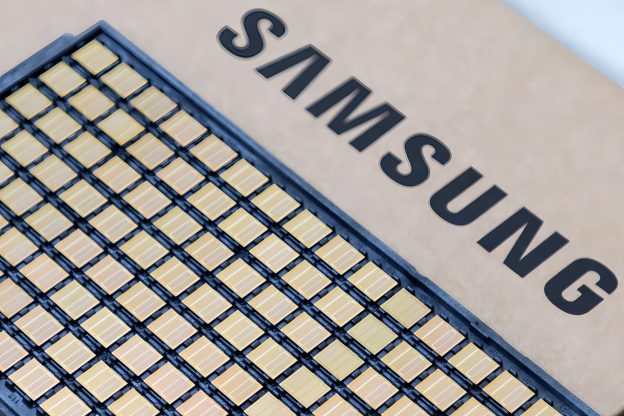
(Photo credit: Samsung)