Popular Keywords



About TrendForce News
TrendForce News operates independently from our research team, curating key semiconductor and tech updates to support timely, informed decisions.
[News] U.S. Think Tank Flags DUVi Loopholes as China Pushes Toward Advanced Chips Using Multipatterning
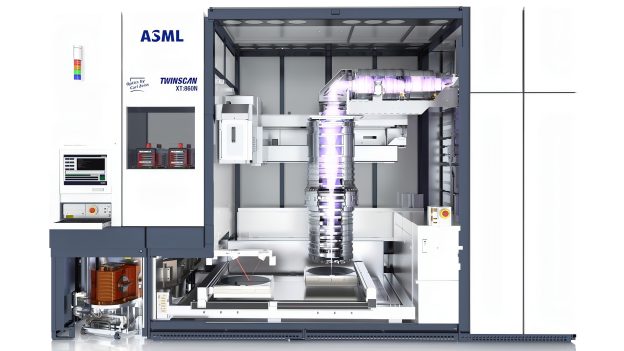
China is reported to have built an EUV lithography prototype by reverse-engineering older ASML tools, drawing industry attention. However, the larger concern may lie less in technological catch-up than in potential loopholes in existing export controls. According to a report from Center for a New American Security, the greater risk stems from China’s continued access to older lithography equipment—tools that can still be used to manufacture advanced AI chips at scale—by exploiting gaps that allow previous-generation equipment to be obtained with limited oversight.
Why DUVi Still Matters Despite Export Controls
As the report notes, Chinese chipmakers have found ways to push older equipment—deep ultraviolet immersion (DUVi) lithography tools that fall outside current restrictions—by adopting multipatterning techniques to produce chips that are said to come closer to leading-edge performance.
While this process significantly lowers yields, slows production, and raises costs, and still falls short of the most advanced chips produced by U.S. and allied manufacturers, the report notes that deploying it at scale could allow China to manufacture enough chips to advance its AI capabilities and narrow its compute gap with the U.S.. The approach is more energy-intensive, but the report adds that China is expanding new energy capacity at roughly ten times the pace of the U.S.
One notable example of China’s efforts to produce more advanced chips using DUVi technology involves domestic startup Yuliangsheng. According to Financial Times, citing sources, SMIC is testing a DUV lithography system developed by the local firm. The report says the Chinese-made 28-nanometer DUV tool is used to manufacture chips in the 7nm class through the use of multipatterning techniques. Sources cited by the report add that while the equipment could, in theory, be pushed toward 5nm production, yields would be significantly lower.
Export-Control Gaps Leave China Access to DUVi Tools
The report notes that current export controls prohibit only the most advanced DUVi tools from being sold to China, while less advanced DUVi systems are restricted only for specific entities, leaving most Chinese buyers free to purchase them. As a result, ASML, the world’s leading DUVi equipment supplier, sold about 70% of its DUVi lithography systems to Chinese customers in 2024, the report adds.
In addition, SMIC and other Chinese companies purchased $38 billion worth of equipment last year from the five leading U.S. allied semiconductor manufacturing equipment suppliers, up 66% from 2022, when the U.S. imposed export controls on advanced chipmaking tools.
Beyond these policy loopholes, the report, citing sources, suggests that cutting China off from routine ASML maintenance would sharply degrade its DUVi fleet within a year, helping the U.S. preserve the compute gap. ASML tools typically require maintenance by the company about every six months, the report adds.
Read more
- [News] China Reportedly Builds EUV Prototype Using Older ASML Components, Eyes 2028 Chipmaking
- [News] SMIC Said to Test Chinese-Made DUV Lithography Tool from SiCarrier Affiliate Amid AI Chip Push
(Photo credit: ASML)
Please note that this article cites information from Center for a New American Security and Financial Times.