Popular Keywords



About TrendForce News
TrendForce News operates independently from our research team, curating key semiconductor and tech updates to support timely, informed decisions.
[News] Murata Reportedly to Mass Produce AI Server Power Modules in 2026, Targets ¥50B by FY27
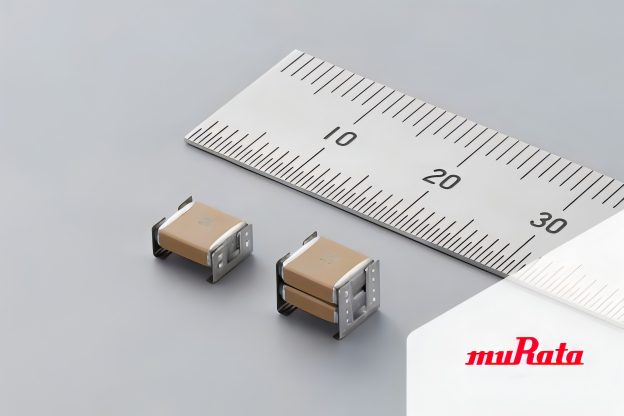
As AI demand accelerates, companies are ramping up efforts to address rising AI-server power needs. According to MoneyDJ, citing Nikkei, Murata Manufacturing plans to begin mass production of power modules for AI servers in 2026. The company is coordinating with hyperscalers and expects to generate approximately ¥50 billion in sales over the two-year period through fiscal 2027.
Alongside multilayer ceramic capacitors (MLCCs), Murata aims to tap AI-related demand through power modules. Citing the company’s president Norio Nakajima, the report notes that Murata is currently in discussions with one major cloud service provider (CSP) regarding power modules for AI servers.
The report also notes that each AI server is equipped with roughly 15,000 to 25,000 MLCCs, and that the company plans to position power modules as its next core product. Nakajima expects AI to be the primary driver of growth, and under the mid-term management plan through fiscal 2027, the company is targeting revenue of more than ¥2 trillion, the report adds.
Murata Bets on AI Servers to Drive MLCC Growth
Surging AI workloads are driving increased demand for MLCCs in AI servers. According to Kyodo News, Murata Manufacturing said demand for MLCCs used in AI servers is projected to be 3.3 times higher in fiscal 2030 than in fiscal 2025. The report adds that as the performance of AI servers continues to improve, the number of MLCCs installed per server is rising, prompting the company to revise upward the forecast presented in its mid-term strategy announced last November.
Murata Manufacturing President Nakajima, as cited by Kyodo News, says the company is planning for MLCCs used in AI servers based on an assumed average annual growth rate of around 30%, adding that demand is expected to shift toward smaller, higher-capacitance components.
Read more
- [News] Tantalum Capacitor Rally on AI: Panasonic Reportedly Hikes 15–30%, Yageo Rides Wave
- Data Center Power Doubling? Next-Gen Efficiency & Sustainability Guide
(Photo credit: Murata Manufacturing)
Please note that this article cites information from MoneyDJ, Nikkei, and Kyodo News.