Popular Keywords



About TrendForce News
TrendForce News operates independently from our research team, curating key semiconductor and tech updates to support timely, informed decisions.
[News] U.S. Invests $150M in xLight as Gelsinger-Led Startup Targets More Precise EUV Lasers Than ASML
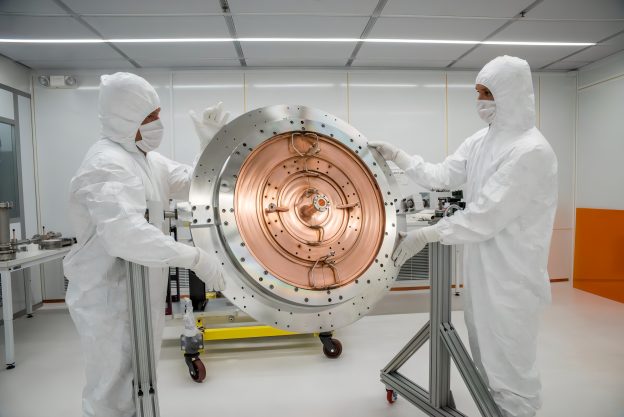
The Trump administration is making a bold bet on U.S. chipmaking capabilities, investing in a startup seeking to advance laser used in EUV lithography tools. According to The Wall Street Journal, the administration has agreed to provide up to $150 million to xLight, where former Intel CEO Pat Gelsinger serves as Executive Chairman of the Board. As the report highlights, Gelsinger said the funding will support xLight’s plan to produce its first silicon wafers by 2028.
In exchange, the government would receive an equity stake that could potentially position it as xLight’s largest shareholder. As The Wall Street Journal notes, this is the first CHIPS Act award of Trump’s second term and is currently a preliminary agreement, meaning it is not final and could still change. The investment draws on funding from the 2022 CHIPS and Science Act earmarked for early-stage companies developing promising technologies.
xLight Advances Free-Electron Laser Technology for Chipmaking
As its press release indicates, xLight is building its first free-electron laser (FEL). The company aims to develop large free electron lasers powered by a particle accelerator to produce a more powerful and precise light source. Reuters notes that xLight is also working with U.S. national laboratories to develop a prototype that could be integrated with machines made by ASML or other manufacturers.
Notably, ASML’s most advanced lasers currently generate extreme ultraviolet light at a wavelength of about 13.5 nanometers, while xLight is targeting wavelengths as precise as 2 nanometers, according to The Wall Street Journal. If the company succeeds, chipmakers could etch even finer microscopic patterns onto silicon wafers. The report also adds that Gelsinger believes the technology could boost wafer-processing efficiency by 30% to 40% and that it is expected to drive the next phase of Moore’s Law.
xLight is not the only company seeking to push forward in light sources for next-generation lithography. According to Reuters, Substrate, a San Francisco–based firm, has developed a chipmaking system it claims can rival ASML’s most advanced lithography machines. Bloomberg notes that the company’s system uses a particle accelerator to generate light from shorter-wavelength X-rays, a method it says can produce even narrower and more precise beams.
Read more
- [News] Decoding China’s Lithography Push to Challenge ASML: From SiCarrier to Alternative EUV Paths
- [News] U.S. Startup Substrate Unveils X-Ray Lithography to Rival ASML — Eyes TSMC Next
(Photo credit: Pat Gelsinger’s LinkedIn)
Please note that this article cites information from The Wall Street Journal, xLight, CNBC, Reuters, and Bloomberg.