Popular Keywords



About TrendForce News
TrendForce News operates independently from our research team, curating key semiconductor and tech updates to support timely, informed decisions.
[News] U.S., Japan Rumored Mulling Joint NAND Fab, with Kioxia, SanDisk Likely In
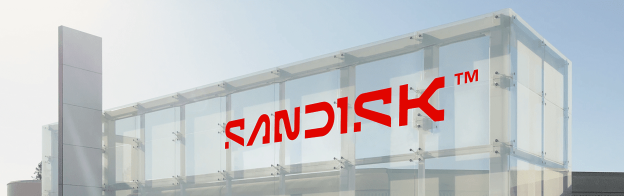
As hyperscalers accelerate data-center buildouts and booming HBM demand tightens memory capacity—sending prices soaring—the industry is reportedly eyeing a cross-border move. Citing Nikkan Kogyo Shimbun, the Commercial Times reports that Japan and the U.S. are considering a public–private plan to establish a NAND flash fab in the U.S., with Kioxia and SanDisk viewed as potential lead investors.
However, the report notes that the project still faces significant obstacles—from capex disagreements to escalating regulatory risks tied to China. Nikkan Kogyo Shimbun, cited by the Economic Daily News, also reports that Kioxia, constrained by its financial position, is likely to stay cautious about taking on new investments.
In its latest earnings report released on November 13, Kioxia posted a net profit of ¥40.7 billion for Q2 FY2025 (July–September), marking a 62% drop compared to the same period last year. The drop, as per media reports, was largely driven by an unfavorable product mix, with seasonal smartphone demand pushing lower-margin smart-device products to 35% of revenue.
Nonetheless, reports pointing to a Kioxia–SanDisk joint NAND fab move are well-founded. TrendForce notes that even as rising ASPs lift industry profitability, DRAM and NAND capex is expected to grow only modestly in 2026. Yet in NAND, Kioxia/SanDisk and YMTC—both without DRAM businesses—are taking the most aggressive steps to strengthen their positions. Kioxia/SanDisk is planning a 41% YoY jump in investments to US$4.5 billion, targeting BiCS8 expansion and BiCS9 R&D.
Global Giants’ NAND Expansion Strategy
By contrast, Samsung, SK hynix, and Micron—each running both DRAM and NAND businesses—are taking a more conservative approach. According to Chosun Biz, the three memory giants have collectively scaled back NAND production in H2 2025, pushing prices even higher.
As per Chosun Biz, Samsung is considering price hikes of 20%–30% or more in negotiating next year’s supply deals with major global clients. Meanwhile, SK hynix has reportedly cut NAND output by roughly 10%, while Micron is keeping production at its Singapore Fab 7 in the low 300,000-unit range, taking a similarly cautious stance.
Read more
- [News] NAND Giants Reportedly Cut Output in 2H25 as Prices Surge; Samsung Mulls 20–30% Hike in 2026
- [News] Kioxia Quarterly Profit Tumbles 62% YoY, But Signals Bottom with Record 3QFY25 Sales Forecast
(Photo credit: SanDisk)
Please note that this article cites information from Nikkan Kogyo Shimbun, Commercial Times, Economic Daily News, and Chosun Biz.