Popular Keywords



About TrendForce News
TrendForce News operates independently from our research team, curating key semiconductor and tech updates to support timely, informed decisions.
[News] TSMC’s 2026 CapEx Reportedly Near US$50B, Driven by 2nm Expansion and Global Buildout
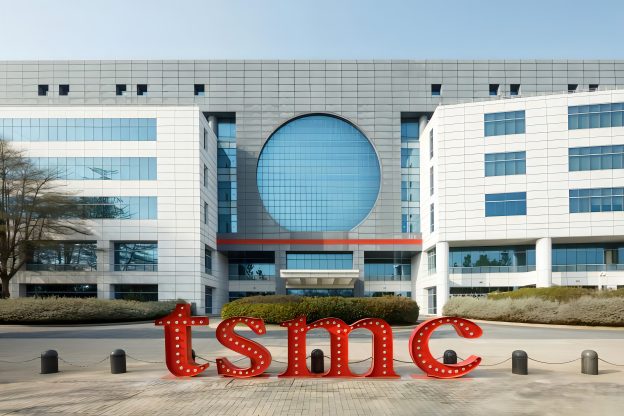
TSMC will hold its 2025 Supply Chain Management Forum on the 25th, an event widely viewed as a key gauge of next year’s capital-expenditure outlook. According to Commercial Times, institutional investors expect TSMC’s 2026 CapEx to reach as much as US$50 billion, driven by strong AI demand, while its capital expenditure for this year is estimated at US$40–42 billion. Supply chain sources note that this year’s forum is particularly significant, as the disclosure of TSMC’s A16 and 2nm expansion schedules would directly determine the scale of upcoming investments in materials, equipment, and facility engineering.
Supply chain sources are paying close attention to next-generation 2nm to A16 processes featuring backside power delivery. As noted by the report, institutional investors point out that A16 mass production will introduce new process requirements such as backside metallization, ultra-thin wafer handling, and higher TSV precision, signaling that the supply chain is entering a new stage.
Regarding materials for advanced processes, industry sources cited by the report note that consumption of 2nm consumables has accelerated noticeably since the fourth quarter. They estimate that a leading foundry customer (could be TSMC)’s 2nm monthly capacity could reach 40,000 wafers by the end of 2025, expand by another 50% by mid-2026, and double to 80,000–90,000 wafers by the end of 2026 — a ramp-up pace that is expected to be faster than it was six months ago.
Therefore, sources cited by the report indicate that, based on the current growth trajectory, revenue from 2nm consumables could match today’s 3nm levels by 2027–2028, implying that TSMC’s 2nm node will enter the mainstream in 2027, as the report highlights.
Institutional investors also project that 2026 will be a pivotal year for the advanced packaging industry. Beyond TSMC’s continued rapid CoWoS (Chip-on-Wafer-on-Substrate) expansion, technologies such as SoIC (System-on-Integrated-Chips) and WMCM (Wafer-Level Multi-Chip Module) are expected to gain momentum, creating spillover demand for OSAT services. According to Commercial Times, this trend will benefit Taiwanese OSAT firms such as ASE and further increase the adoption of Taiwan-made equipment.
TSMC’s Global Buildout Gains Clarity and Speed
As for its global expansion, the report notes that TSMC’s extended order visibility has made it easier for facility-engineering contractors to manage construction timelines. These firms have reportedly secured a facilities project in Germany, with overall progress ahead of expectations. As the report highlights, contractors note that TSMC has shifted its construction strategy from engaging firms for just one year of work to planning projects two years in advance, reflecting a clearer expansion roadmap. At the same time, TSMC is increasing the share of local hires across its global sites, helping to accelerate project progress in each region.
Read more
- [News] TSMC Dresden Fab Reportedly Enters Structural Build, Eyes Equipment Move-In in 2H26
- [News] TSMC Reportedly Plans 12 New Advanced Process and Packaging Fabs in Taiwan as 2nm Supply Tightens
(Photo credit: TSMC)
Please note that this article cites information from Commercial Times.