[News] Intel CTO and AI Chief Departs for OpenAI; CEO Lip-Bu Tan Steps In to Lead AI Push
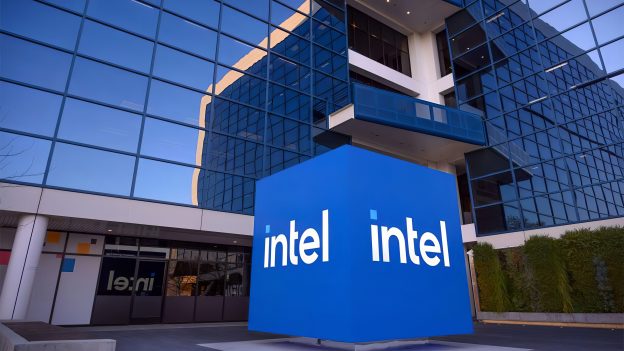
Intel has made AI a cornerstone of its turnaround strategy, yet recent leadership changes underscore the challenges of executing that vision. According to Reuters, the company’s chief technology and AI officer, Sachin Katti, has left to join ChatGPT maker OpenAI, prompting CEO Lip-Bu Tan to take direct charge of Intel’s AI business.
Katti was elevated to the roles of chief technology officer and chief AI officer in April, during a period when Tan streamlined the company’s leadership structure, the report notes. Aside from Katti, CRN indicates that several other executives have also left Intel in recent months, including former Global Channel Chief John Kalvin and 25-year company veteran Rob Bruckner, who had been appointed by Tan to lead the Platform Engineering Group.
In addition, Saurabh Kulkarni, Intel’s vice president of data center AI product management, recently announced his departure from the company, according to CRN. In a LinkedIn post, he said he will join AMD as corporate vice president of datacenter GPU product management. CRN adds that the move comes as AMD steps up efforts to challenge AI infrastructure leader NVIDIA, bolstered by a data center strategy that has helped it win OpenAI as a major customer.
Intel Reaffirms AI Focus with New GPU Strategy
In response to Katti’s departure, as noted by Reuters, Intel said in a statement that AI remains one of its top strategic priorities, emphasizing its commitment to executing the company’s technology and product roadmap to support emerging AI workloads.
Intel has recently renewed its efforts to expand in the AI chip market after the limited traction of its earlier Gaudi lineup. As noted by CRN, the company unveiled a 160-GB energy-efficient data center GPU at the 2025 OCP Global Summit last month, part of a new annual GPU release cadence aimed at advancing its strategy of offering open systems and software architectures for AI infrastructure.
According to Tom’s Hardware and Reuters, the company’s next-generation data center GPU, Crescent Island, is scheduled to begin customer sampling in the second half of 2026. Intel says Crescent Island is being designed to be power- and cost-optimized for air-cooled enterprise servers, targeting inference workloads.
Alongside launching its own AI chips, Intel has also been actively seeking new clients for its foundry business. According to Reuters, Tesla CEO Elon Musk recently said he might consider working with Intel, noting that while no agreement has been reached yet, it would likely be worthwhile to hold discussions with the company.
Read more
- [News] Intel Reportedly Eyes AI Startup SambaNova, Where Lip-Bu Tan Serves as Executive Chairman
- [News] Intel Renews AI Chip Push with Crescent Island, 2H26 Sampling; Reportedly Targeting Annual GPUs
(Photo credit: Intel)
Please note that this article cites information from Reuters, CRN, Saurabh Kulkarni’s LinkedIn, Tom’s Hardware, and Intel.